
Career Opportunities After Studying Agriculture: Top Career Options – Jobs, Salary & Scope
Home / Agriculture / Career Opportunities After Studying Agriculture: Top Career Options – Jobs, Salary & Scope
The growing agtech industry in the world, biotechnology developments, and rural banking systems have made agriculture a highly rewarding career after agriculture. Freshers get jobs in corporate agriculture businesses, research laboratories, and administration sectors. Initial salaries lie between ₹3.5 LPA and ₹12 LPA. However, specific occupations and government officer jobs provide salaries above ₹15 LPA. Top choices include agronomy, agri-banking, precision farming, seed technology, and public sector officers.
What is the Scope of BSc Agriculture in the Current Agri-Business & Research Sector?
Modern agriculture is not limited to conventional farming activities. With the help of AI, IoT, GIS Mapping, and biotechnology innovations, modern agriculture has created several career opportunities in agriculture for graduates:
- Agri-tech & Precision Farming: Businesses utilize big data science and drones for analyzing field data, which creates a job opportunity for agriculture graduates with technology knowledge.
- Corporate Agri-business Management: Agri-supply chain management, logistics of harvest goods, trade in international agri-commodities, and selling inputs to farms require skilled managers.
- Agricultural Finance & Risk Management: Banks, both governmental and private, as well as MFIs, look for professionals to manage credit portfolios, crop insurance, and rural financing activities.
- Biotechnology & Seeds Innovation: Private organisations and research centres work on developing climate-resistant plants, bio-pesticides, and genetically modified seeds.
Career Options After Completing BSc Agriculture
A successful career path in the agriculture sector needs an assessment of career opportunities in government service, private organizations, higher studies, or independent agriculture ventures.
Government Recruiters & Job Roles
| Recruiter Organization | Primary Job Roles | Salary Scale (Entry Level) | Key Responsibilities |
| State Public Service Commissions (e.g., HPSC, UPPSC) | Agricultural Development Officer (ADO), Block Development Officer | Level 6 / Level 7 (₹35,400 – ₹1,12,400 basic) | Scheme execution, district crop planning, farmer extension services |
| National Bank for Agriculture and Rural Development (NABARD) | Assistant Manager (Grade A Officer) | Basic ₹44,500; Gross ~₹1,00,000/month | Rural credit policies, agricultural loan sanctioning, farm infrastructure funding |
| Institute of Banking Personnel Selection (IBPS) | Agricultural Field Officer (AFO – Specialist Officer) | Level 7 / Scale I (₹36,000 – ₹63,840 basic) | Agri-lending evaluation, farm visits, priority sector loan management |
| Food Corporation of India (FCI) / Central Warehousing Corporation (CWC) | Technical Assistant, Management Trainee | ₹34,000 – ₹1,40,000 (Pay Scale) | Quality control, grain procurement, warehousing logistics management |
Private Sector — Recruiters & Job Roles
| Sector / Industry Segment | Major Employers | Job Roles | Average Starting CTC |
| Seed & Input Manufacturing | Syngenta, Bayer CropScience, UPL, Advanta | Field Development Officer, Sales Manager, Product Specialist | ₹3.5 LPA – ₹6.0 LPA |
| Agri-Tech & Agronomy Services | DeHaat, Ninjacart, CropIn, Absolute | Precision Agronomist, Tech Specialist, Field Operations Officer | ₹4.0 LPA – ₹7.5 LPA |
| Food Processing & Retail | ITC Limited, Nestlé, Amul, Kargil | Procurement Executive, Quality Assurance Manager, Supply Specialist | ₹4.5 LPA – ₹8.0 LPA |
| Microfinance & Banking | HDFC Bank, ICICI Bank, Axis Bank | Rural Marketing Officer, Agri-Credit Manager | ₹4.0 LPA – ₹6.5 LPA |
Salary in the Agriculture Sector in India (Government vs Private)
| Career Track | Entry-Level Pay (0-2 Yrs) | Mid-Level Pay (3-7 Yrs) | Senior-Level Pay (8+ Yrs) |
| Government Cadre | ₹45,000 – ₹85,000 per month | ₹80,000 – ₹1,30,000 per month | ₹1,40,000 – ₹2,10,000 per month |
| Private Agri-Corporate | ₹30,000 – ₹55,000 per month | ₹60,000 – ₹1,10,000 per month | ₹1,20,000 – ₹2,50,000+ per month |
| Agri-Tech Startups | ₹35,000 – ₹60,000 per month | ₹75,000 – ₹1,40,000 per month | ₹1,50,000 – ₹3,00,000+ per month |
Note: The typical agriculture officer salary in India varies depending on the recruiting authority, base pay level, and location allowances.
Students Must Know:
What to do after BSc Agriculture? Higher Studies & Professional Certifications in Agriculture
While comparing careers after BSc agriculture with careers after MSc agriculture, the postgraduate route offers scientific posts, lecturer jobs and higher pay scales in ICAR institutes. Apart from just applying for a job, there are a few other structured routes that help in creating a career in research and management after agriculture.
- MSc Specialisations: Agronomy, Horticulture, Plant Pathology, and Agricultural Economics deepen subject expertise and open research and teaching positions.
- MBA in Agribusiness: management-track roles in agri-marketing, supply chain, and corporate agribusiness planning
- Professional Certifications: precision farming, GIS mapping, and organic certification auditing add a specific, marketable skill
- Diploma Courses: seed technology and post-harvest management diplomas support niche technical roles
Top Government Exams & Public Sector Opportunities After BSc Agriculture
There are few structured exams through which one can directly start their career after agriculture in public sector agriculture jobs, which, when seen in conjunction, clearly differentiate between the government jobs & private jobs after BSc agriculture.
- ICAR AIEEA (PG)/AICE-JRF/SRF: Conducted by the National Testing Agency (NTA) for postgraduate and doctoral admissions at all ICAR institutes and state agricultural universities.
- IBPS SO (Agricultural Field Officer): Yearly recruitment exam for Scale-I Specialist Officers in public sector banks.
- UPSC Indian Forest Service (IFS): Students who have completed their BSc agriculture can also appear for the IFS exam along with Civil Services Prelims.
- State PSC Exams: State-level exams that take place every now and then for posts such as Agricultural Officer (AO), District Horticulture Officer (DHO), and Assistant Development Officer.
How Geeta University Helps in Creating Careers in Agriculture?
A good Career after agriculture requires industry exposure along with research exposure, which is what the School of Agricultural Sciences at Geeta University offers through its BSc and MSc programs.
- ICAR-aligned Curriculum: The BSc Agriculture program is aligned to the curriculum recommended by the Sixth Dean’s Committee, as per NEP 2020
- Field Exposure: Rural Agricultural Work Experience and Experiential Learning Program provides structured field training to students.
- Practical Training Grounds: In addition to labs, students get to practice on faculty-owned farms as well.
- Placement Assistance: An industry network helps students connect with agricultural business, government, and research organizations.
Conclusion
A career after agriculture opens up many opportunities in various sectors like corporate, research, finance and government. The choice of higher studies, private sector employment, and public service will depend on individual career goals. Developing technical skills, field knowledge, and staying updated with innovations in agtech will help in creating a successful career.
Frequently Asked Questions
MSc Agriculture should be pursued if research/scientist grade role appeals to the student; private/government jobs after BSc Agriculture should be pursued for a career in agriculture.
Decide on what career path to pursue based on government exams, private sector job opportunities and higher studies options after BSc Agriculture.
Yes. With increasing agribusinesses and consistent recruitment by the government, agriculture is a stable career after agriculture for students in the region, and even Geeta University provides placement assistance in this ecosystem.
The candidates who graduate from the northern universities, like Geeta University, are eligible for IBPS AFO, state ADO posts, ICAR JRF, and NABARD Grade A recruitment.
M.Sc Agriculture gives way to research and teaching jobs and scientist-grade posts in the government sector. Geeta University, Panipat, offers an M.Sc Agriculture (Agronomy) course along with research collaborations, which can be a great option for a career after agriculture.
Related Blogs

B.Sc. Hons. Agriculture: Scope, Syllabus, Eligibility and Career Opportunities
The B.Sc. Hons. Agriculture course has become one of the most rewarding undergraduate pathways for…

BSc Agri Admission 2026: Eligibility, Entrance Exam, Form, Fees and Career Guide
Choosing the right path after Class 12 shapes the next four years of your life,…
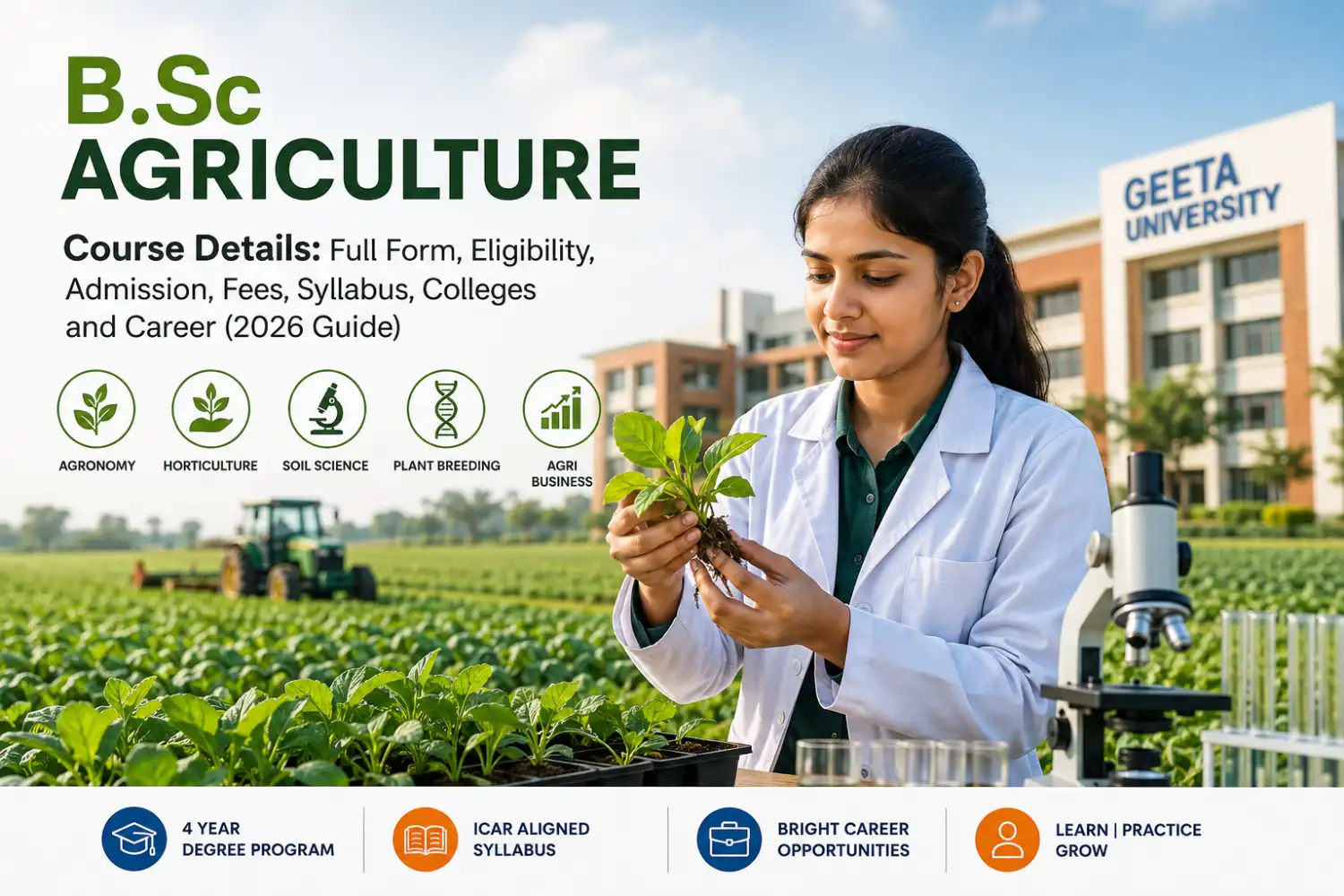
B.Sc Agriculture Course Details: Full Form, Eligibility, Admission, Fees, Syllabus, Colleges and Career (2026 Guide)
Choosing the right undergraduate degree shapes the next four years and, in many ways, the…
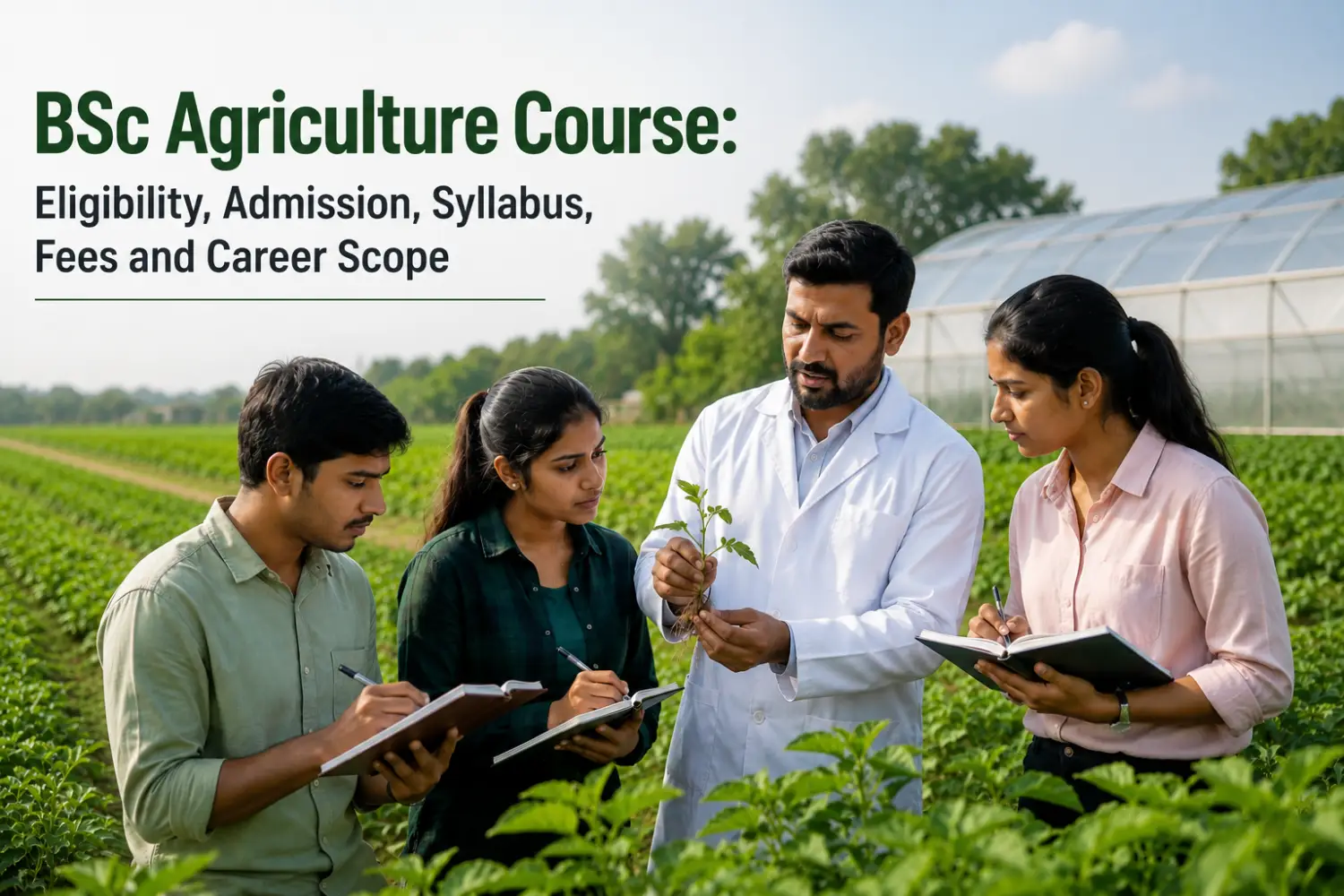
BSc Agriculture Course: Eligibility, Admission, Syllabus, Fees and Career Scope
Agriculture is no longer only about ploughs and monsoons. It has grown into a science…

BSc Agriculture Courses After 12th: A Complete Guide to Admission, Syllabus and Career
Choosing the right degree after school shapes the next decade of your life. If you…

BSc Agriculture Top Colleges: How to Choose the Right University for Your Farming Career
India’s agricultural sector is going through a quiet revolution. Precision farming, AgriTech startups, GIS-based crop…