Geeta University official logo

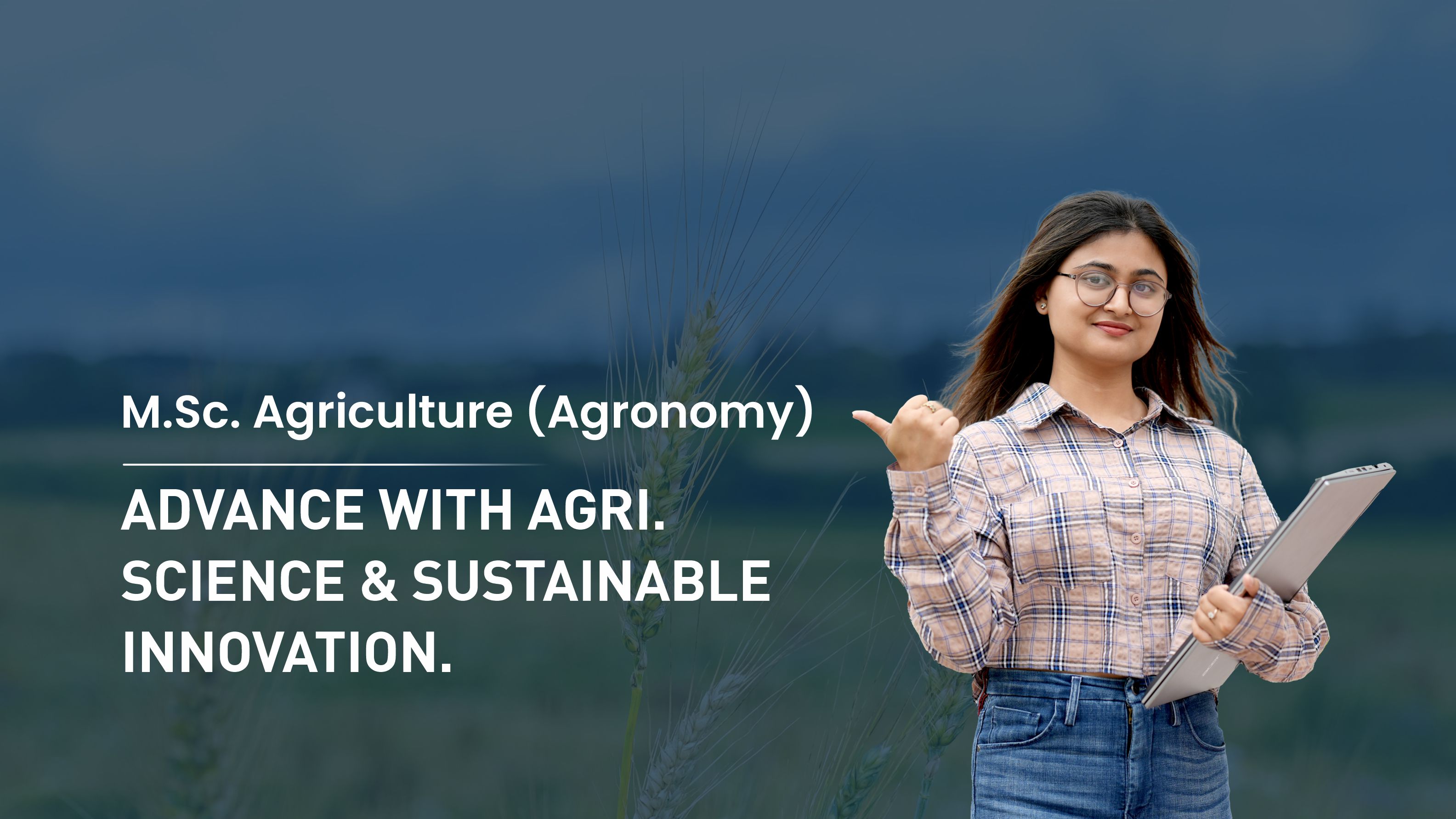
M.Sc. Agriculture (Agronomy)

Program

M.Sc. Agriculture (Agronomy)

Duration

2 Years

Eligibility

Graduation in Agriculture or a relevant discipline with minimum 50% marks.

M.Sc. Agriculture (Agronomy)

M.Sc. Agriculture (Agronomy) is a two-year postgraduate course offered by Geeta University that focuses on crop production, soil management, irrigation, and sustainable farming. This programme helps students gain advanced knowledge of modern agriculture and prepares them for careers in both government and private sectors.

This M. Sc. Agronomy course offered at Geeta University tells you about the agricultural industry and how to become an agricultural master. You will not simply be cramming information because the focus on practicality also includes working in a laboratory, completing tasks as part of a project, and using new approaches to produce more food with less harm to the earth. It combines theoretical knowledge with an option for practical experience, enabling the student to gain broader perspectives on different professional agronomic approaches and fully utilize modern techniques.

Important Takeaways
  • The M.Sc. Agriculture (Agronomy) at GU is a 2-year postgraduate program
  • State-of-the-art research facilities and experimental farms
  • Collaboration opportunities with national and international agricultural research institutes
  • Faculty with expertise in various specialisations of agronomy
  • Regular seminars, workshops, and conferences to enhance knowledge and networking
  • Opportunities for research publications and presentations at national and international forums
Geeta University M.Sc. Agriculture (Agronomy) Postgraduate Degree – Subjects

Here are the elective details for the GU MSc Agri (Agronomy) course:

  • Principles of Agronomy & Sustainable Farming
  • Soil Biology & Biochemistry
  • Practices of Water Management
  • Forage Management & Pasture Utilization
  • Pest & Nutrient Status Monitoring
  • Weed Science & Herbicide Application
  • Remote Sensing & GIS in Agriculture
  • Cropping Systems & Land Use Planning
  • Climate Change Impact on Crops
  • Agri-Research Methodologies & Data Analysis
Learning Outcomes
  • Acquire advanced agronomic knowledge and research skills
  • Use GIS, drones, and AI tools in precision agriculture
  • Solve climate and resource-related agri challenges
  • Publish research and prepare for doctoral studies
  • Qualify for teaching, research, and agri-policy roles
Geeta University M.Sc. Agriculture (Agronomy) Degree Admission Process
  • Eligibility Criteria: Candidates for an Agriculture Masters degree must have Graduation in Agriculture or a relevant discipline with minimum 50% marks.
Why Choose an M.Sc. Agriculture (Agronomy)?

Pursuing an M.Sc. Agriculture (Agronomy) is not just about getting a degree; it’s about becoming a problem-solver for farmers and agricultural industries. This program opens multiple career doors in teaching, research, government services, and private agribusiness firms. Learners also develop critical thinking and practical skills, enabling them to contribute toward sustainable farming and food security at both local and global levels.

The MSc Agriculture in Agronomy is an ideal choice for individuals who are passionate about working close to nature, innovating in agriculture, and building a career that directly impacts society.

Read More ↓

Enquire Now

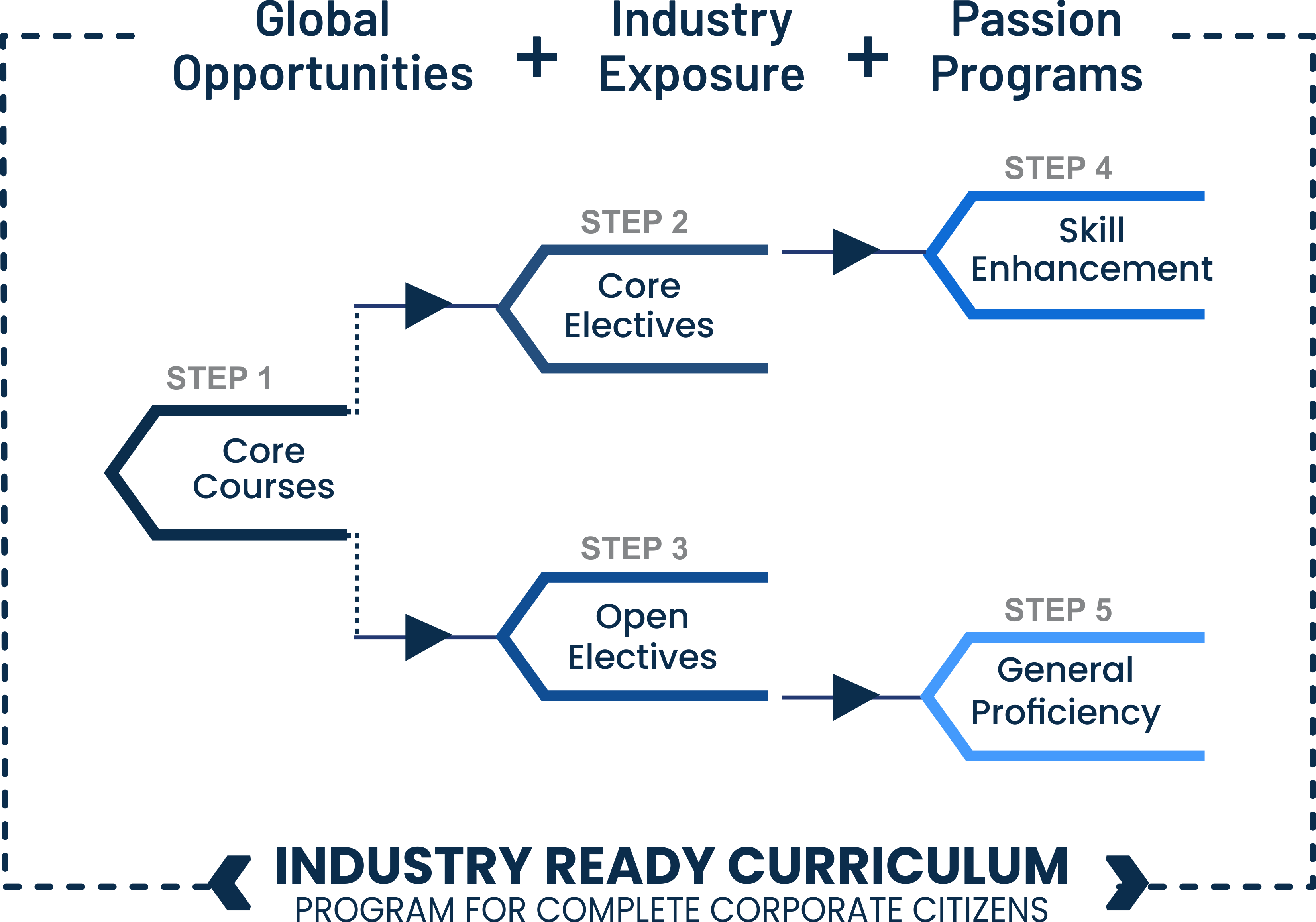
DESIGN YOUR OWN DEGREE WITH GU

Degree Design

Meet Our Mentors

Guiding Futures with Expertise, Experience & Empathy

WhatsApp Image 2026-06-18 at 12.55.14
Dr. Jagraj Singh

Assistant Professor, Ph.D. (Vegetable Science)

Horticulture Vegetable Science, Vegetable Production, Vegetable Breeding, Nutrient Management and Protected Cultivation.

Horticulture Vegetable Science, Vegetable Production, Vegetable Breeding, Nutrient Management and Protected Cultivation.

RED06365
Dr. Neha Dahiya

Assistant Professor, Ph.D. (Genetics & Plant Breeding)

Published 20+ research papers, holds 2 Published Patents and 1 Granted Patent; Recognized for significant contributions in Plant Breeding.

Published 20+ research papers, holds 2 Published Patents and 1 Granted Patent; Recognized for significant contributions in Plant Breeding.

WhatsApp Image 2026-06-18 at 12.55.15 (1)
Mr. Sharandeep Singh Cheema

Assistant Professor, M.Sc. (Soil Science & Agricultural Chemistry)

Expertise in Soil Science and Agricultural Chemistry, More than 10 articles, 4 research papers, 1 Book chapter, 2 Books published

Expertise in Soil Science and Agricultural Chemistry, More than 10 articles, 4 research papers, 1 Book chapter, 2 Books published

Dr. Shiv Kumar Shivandu (Custom)
Dr. Shiv Kumar Shivandu

Assistant Professor, Ph.D. (Fruit Science)

Published 25+ Research Papers with 100+ Citations, Holds Patents on Orchard Tools, Known for Research in Litchi and Citrus Post-Harvest Technology.

Published 25+ Research Papers with 100+ Citations, Holds Patents on Orchard Tools, Known for Research in Litchi and Citrus Post-Harvest Technology.

Virtual Campus Tour

SCHOLARSHIPS AT GEETA UNIVERSITY

We believe that financial constraints should not limit access to quality education. At Geeta University, we offer scholarships based on:

  •  Merit/Percentage in Qualifying Exams
  •  National Level Entrance Exams (JEE, CUET, NEET, CLAT, and more)
  •  Social Responsibility
  •  Sports Performance    

GUTS

Geeta University Test of Scholarship
Geeta University (GU) strongly believes that monetary constraints should not be an obstacle for a student to have access to quality education. Geeta University Test of Scholarship (GUTS) provides students with an opportunity to reduce the financial burden and get up to 100% off on tuition fees based on their performance.

Highlights of Our Learning Spaces

Career opportunities after completing M.Sc. Agriculture (Agronomy) course

Among the most exciting aspects of pursuing an M.Sc. Agriculture (Agronomy) is the wide range of career opportunities it offers. Graduates can work in government sectors, private industries, research organisations, or even start their own ventures.

Government Sector Roles: The government remains one of the largest employers of agronomy graduates. Common roles include:

  • Agricultural Officer: Collaborates with farmers to adopt contemporary practices and regulations.
  • Soil Conservation Officer: Guarantees the sustainable use of soil resources.
  • Research Scientist: Conducts experiments and participates in governmental agriculture initiatives.
  • Extension Officer: Serves as a bridge between agricultural research universities and farmers.
  • Exams administered by ICAR, State Public Service Commissions, or UPSC fill numerous positions.

Private Sector Roles: M.Sc. Agriculture (Agronomy) graduates are in demand at private agribusinesses, fertiliser companies, seed companies, and irrigation firms. Some popular roles include:

  • Specialist in Pesticides & Fertilizers: Employed in enterprises manufacturing agricultural inputs
  • Agribusiness Administrator: Manages supply chains, sales and marketing of agricultural goods.
  • Specialist in Precision Agriculture: Utilize technology such as drones and sensors for precision agriculture production
Why prefer Geeta University for pursuing a degree in M.Sc. Agriculture (Agronomy)?

Geeta University, among the top agriculture universities in Haryana with a focus on Agronomy, possesses all the requisite attributes that make it an outstanding option for this specialty.

  • All-inclusive MSc Agriculture Program: Geeta University provides a thorough M.Sc. Agriculture program with a focus on Agronomy, delivering a robust curriculum to meet the academic and professional aspirations of prospective agronomists.
  • Distinguished Faculty and Research Prospects: The institution has teachers with extensive knowledge in Agronomy, actively engaging in research and providing students with significant possibilities for practical learning and networking.
  • Internship and Employment Opportunities: Geeta University equips its students with practical exposure and significant work experiences via a strong industry network and comprehensive internship programs, resulting in outstanding job placements after graduation.
  • Location of Agricultural Hub: Geeta University capitalizes on its proximity to agricultural centers and research organizations, providing students with numerous opportunities for practical study and networking.
  • Dynamic Campus Environment: Geeta University cultivates a constructive and supportive campus environment, promoting extracurricular engagement and enhancing student life, thereby facilitating a comprehensive and rewarding educational experience.

40 LPA

HIGHEST PACKAGE

550+

RECRUITERS

3500+

JOB OFFERS

Frequently Asked Questions

Find answers to common questions about eligibility, courses, placements, and campus facilities.

The School offers B.Sc. (Hons.) Agriculture, M.Sc. Agronomy, M.Sc. (Horticulture) Vegetable Science, M.Sc. (Horticulture) Fruit Science, M.Sc. Genetics & Plant Breeding, M.Sc. Entomology and Ph.D. Agriculture.
Applicants need 10+2 or equivalent with Physics, Chemistry and Biology/Mathematics or Agriculture, with at least 50% marks.
Yes. Biology is one of the accepted subject backgrounds for the programme.
Yes. Mathematics is included among the eligible subject combinations.
Yes. Agriculture is specifically included among the accepted subject backgrounds.
Applicants should hold a relevant graduation degree with at least 50% marks, subject to the specific programme's admission requirements.
Applicants should meet the University's applicable doctoral eligibility requirements, including the required relevant postgraduate qualification and minimum 55% marks.
It is a four-year undergraduate programme spread across eight semesters.
Students can choose M.Sc. Agronomy, M.Sc. (Horticulture) Vegetable Science, M.Sc. (Horticulture) Fruit Science, M.Sc. Genetics & Plant Breeding or M.Sc. Entomology.
It focuses on crop production, agronomic practices, productivity and sustainable management of agricultural systems.
The programme focuses on scientific vegetable production, crop improvement, cultivation practices and related horticultural management.
It focuses on fruit production, crop management, improvement, post-harvest aspects and scientific fruit cultivation.
It deals with plant genetics, breeding methods and crop improvement for developing better-performing plant varieties.
The programme focuses on insects affecting agriculture, their identification, management and integrated approaches to pest control.
Research can span areas such as agronomy, soil science, plant breeding, entomology, horticulture, biotechnology and climate-smart agriculture, depending on available research expertise.
The School states that its curriculum is aligned with the ICAR 6th Dean Committee framework and follows the NEP 2020 framework.
No. Classroom learning is combined with farm work, laboratories, field activities, RAWE, experiential learning, visits and demonstrations.
Students receive practical exposure through experimental farms, crop-production training units, demonstration units and other field-based learning spaces.
RAWE provides Rural Agricultural Work Experience, while experiential learning lets students apply agricultural concepts through practical activities and field-based tasks.
The School highlights precision farming, smart agriculture, protected cultivation and other technology-enabled approaches to modern farming.
Yes. Sustainable agriculture, climate-smart farming, organic agriculture and responsible resource use are among the School's focus areas.
Yes. The academic and research environment covers entomology and Integrated Pest Management as important areas of agricultural practice.
Yes. Crop improvement, genetics and plant breeding are supported through dedicated academic and laboratory areas.
The School highlights Agronomy, Genetics & Plant Breeding, Entomology, Horticulture, Seed Testing and Soil Science laboratories.
It provides a practical setting for learning about seed quality and testing-related agricultural practices.
Yes. The School has a Soil Science Laboratory for practical learning related to soils and agricultural production.
Yes. Horticulture is supported through a dedicated laboratory, experimental learning spaces and practical exposure to vegetable and fruit production.
Yes. The School highlights protected cultivation structures as part of its experiential learning spaces.
Yes. Precision farming exposure is specifically listed among the School's practical learning facilities.
Yes. Field research facilities and experimental farms are part of the School's learning environment.
The School highlights connections with organisations such as IFFCO, Bayer, Syngenta, UPL, Mahindra Agri, Godrej Agrovet, Advanta Seeds and Nuziveedu Seeds.
Yes. Kisan Interaction Programmes are among the School's listed academic and engagement activities.
Activities include crop exhibitions, guest lectures, workshops, seminars, research presentations, awareness campaigns and plantation drives.
Yes. Research presentations, field research facilities and research-oriented learning are part of the School's academic environment.
Key areas include sustainable agriculture, climate-smart farming, organic agriculture, precision farming, crop improvement and Integrated Pest Management.
The School's earlier academic profile highlights exposure to Remote Sensing and GIS through its IIRS-ISRO linkage, subject to the opportunities available in the programme.
Graduates can explore roles such as Agronomist, Agricultural Officer, Agri-Entrepreneur and positions in agribusiness, research, government services and allied sectors.
Depending on the specialisation, graduates can pursue specialist roles, research, teaching, industry positions, agricultural advisory work or doctoral studies.
Possible pathways include plant breeding, crop improvement, seed-sector roles, research and higher studies.
Career directions include pest management, research, agricultural advisory roles, agri-input companies and further academic study.
Yes. Agribusiness is an important career pathway, covering areas such as inputs, production, marketing, supply chains and agricultural services.
Yes. Students can explore agri-entrepreneurship in areas such as farm enterprises, nurseries, agricultural inputs, food-related ventures and consultancy.
Yes. Government services and agricultural officer roles are among the career pathways highlighted by the School, subject to the requirements of individual posts.
Yes. Students who meet the applicable doctoral eligibility requirements can progress to Ph.D. Agriculture.
Faculty expertise covers areas such as agronomy, horticulture, plant breeding, entomology, soil science, nutrient management, protected cultivation and post-harvest technology.
Students combine academic study with laboratory work, farm activities, field demonstrations, RAWE, experiential learning and industry exposure.
Yes. Fieldwork, presentations, expert interactions, workshops and experiential activities help students build communication, teamwork and professional skills.
Yes. The programme is science-based and does not require students to come from a farming background.
No. Modern agriculture includes agritech, crop improvement, horticulture, pest management, food systems, agribusiness, research and sustainable resource management.
Yes. Areas such as precision farming, smart agriculture and technology-enabled crop management connect agriculture with modern technology.
Choose according to your interest: Agronomy for crop production, Vegetable or Fruit Science for horticulture, Genetics & Plant Breeding for crop improvement, and Entomology for insect and pest management.
It combines an ICAR-aligned academic framework with laboratories, experimental farms, RAWE, field activities, protected cultivation, precision-farming exposure, research and industry interaction.
Yes. Career avenues also include agribusiness, seed and agri-input companies, research, government services, horticulture, pest management, agricultural marketing and entrepreneurship.
The field now extends into agritech, sustainable and climate-smart farming, crop improvement, horticulture, research, agribusiness and technology-driven agriculture.
The School highlights industry connections and career pathways. Individual placement outcomes depend on student skills, recruiter requirements and opportunities available in a particular cycle.

Legacy & Ecosystem

Founded in 1985, the Geeta Group of Institutions has emerged as a major educational hub with institutions spanning school education to doctoral programs. SPBSB benefits from the integrated ecosystem of:

Geeta University

AI-enabled multidisciplinary campus

Geeta Finishing School (GFS)

Communication & Corporate Readiness

Geeta Technical Hub (GTH)

Advanced Technology, Certifications, and Industry Skills

Geeta Group Campus