
Hotel Management in Delhi NCR: Courses, Colleges, Fees and Careers (2026 Guide)
Home / School of Hospitality & Hotel Management / Hotel Management in Delhi NCR: Courses, Colleges, Fees and Careers (2026 Guide)
What You Need to Know About Hotel Management in Delhi NCR
Hotel management in Delhi NCR is a professional education route of two to four years that prepares students for paid roles in hotels, resorts, airlines, cruise lines, catering companies and event firms. Students enter after Class 12 through a diploma, a B.Sc. degree or a BHMCT degree. Hotel management colleges in Delhi NCR are spread across Delhi, Gurugram, Noida, Greater Noida, Faridabad, Ghaziabad, Sonipat and Panipat. Full programme fees usually fall between Rs. 90,000 and Rs. 5,00,000. Entry-level salaries commonly begin between Rs. 2.4 lakh and Rs. 4.8 lakh a year, and rise quickly for graduates who complete an overseas internship.
If you are comparing options right now, the three questions that matter most are simple. How many hours will you spend in a real kitchen or at a real front desk. Which hotel brands actually visit the campus. Whether the college arranges an industrial training placement, or expects you to find one yourself.
Why Is Delhi NCR the Strongest Region in India to Study Hotel Management?
Delhi NCR combines three things that very few Indian regions offer together: a dense cluster of five-star inventory, a constant flow of corporate and MICE travel, and an airport that functions as the country’s busiest international gateway. That combination is why a hotel management course in Delhi NCR gives students something a classroom alone cannot, which is proximity to working hotels.
The wider market is expanding as well. <cite>India’s hotel industry is projected to grow between 9 and 12 per cent year on year in FY26, supported by leisure travel, corporate bookings, weddings and MICE activity, according to rating agency ICRA</cite>. <cite>The Federation of Associations in Indian Tourism and Hospitality projects that the tourism and hospitality sector could generate 100 million additional jobs by 2047</cite>. Delhi NCR captures a disproportionate share of that demand.
| Demand Driver in Delhi NCR | Why It Matters for Hotel Management Students |
|---|---|
| Aerocity and airport-adjacent hotel belt | High volume of international guests, so students learn global service standards early |
| Gurugram and Noida corporate corridors | Steady business travel and MICE bookings that create year-round staffing needs |
| Wedding and banqueting economy | Large-format catering and banquet operations experience during peak season |
| Government, diplomatic and embassy circuit | Protocol-heavy service exposure that is rare in other Indian cities |
| Cloud kitchens and quick-service chains | Food production roles that hire directly from campus |
| Expressway connectivity to Panipat, Sonipat, Jaipur | Campuses outside the city core still access NCR industry visits and internships |
The practical takeaway is straightforward. Studying hotel management in Delhi NCR shortens the distance between what you learn in a training kitchen and what you do on a live shift.
What Does a Hotel Management Course in Delhi NCR Actually Teach You?
A good course in this field is not only about cooking or about rooms. It is an operations degree wrapped around a service discipline. The curriculum splits into six working areas, and every serious hotel management institute in Delhi NCR builds its timetable around them.
| Core Domain | What You Learn | Where It Is Used |
|---|---|---|
| Food production | Kitchen technique, Indian and continental cuisine, bakery, larder, portion control | Hotel kitchens, cloud kitchens, catering units, cruise galleys |
| Food and beverage service | Restaurant service sequence, bar operations, banquet service, menu knowledge | Fine dining, banquets, in-room dining, airline catering |
| Front office operations | Reservations, check-in and check-out, guest cycle, property management software | Hotel front desks, reservations centres, guest relations |
| Housekeeping and accommodation | Room standards, linen and laundry, public area maintenance, hygiene protocols | Hotels, resorts, serviced apartments, hospitals |
| Hospitality management and finance | Costing, revenue management, marketing, human resources, facility planning | Management trainee tracks, operations management |
| Tourism and event management | Destination knowledge, itinerary planning, conference and wedding execution | Travel companies, event agencies, tourism boards |
Notice how much of this is measured in hours on your feet rather than pages in a textbook. When you shortlist any hotel management institute in Delhi NCR, ask for the practical-to-theory ratio in writing.
What Does a Typical Week Look Like?
Students consistently underestimate how physical the first two years are. A realistic weekly pattern at a practical-heavy institution looks roughly like this.
| Day Block | Typical Activity | Hours |
|---|---|---|
| Morning practicals | Kitchen production, bakery batch, or breakfast service simulation |
3 to 4 |
| Late morning theory | Nutrition, costing, hospitality law, communication |
2 |
| Afternoon labs | Front office simulation, housekeeping standards, table layout drills |
2 to 3 |
| Evening sessions | Grooming, personality development, language practice |
1 |
| Weekend blocks | Industry visits, guest lectures, banquet duty during peak season |
Variable |
Uniform inspection, hygiene checks and punctuality are graded from week one at serious institutions, because those habits are exactly what a hotel supervisor will assess on your first shift.
Which Hotel Management Courses in Delhi NCR Can You Join After Class 12?
You have more entry routes than most applicants realise. The right one depends on how quickly you want to start earning and how far you want to climb.
| Course | Duration | Eligibility | Best Suited For |
|---|---|---|---|
| Diploma in Hospitality Operations |
1 to 2 years | 10+2 with 50 per cent | Students who want fast entry into operational roles |
| B.Sc. in Hospitality and Hotel Studies |
3 years (4 years with Honours) |
10+2 with 50 per cent, any stream |
The standard degree route with the widest recruiter acceptance |
| BHMCT (Bachelor of Hotel Management and Technology) |
4 years | 10+2 with 50 per cent | Students who want a technology-heavy catering specialisation |
| BA or B.Sc. in Culinary Arts |
3 years | 10+2 with 50 per cent | Aspiring chefs focused on a food production course pathway |
| BBA in Hospitality and Tourism Management |
3 years | 10+2 with 50 per cent | Students leaning towards travel, revenue and commercial roles |
| Craft certificate courses (bakery, front office, housekeeping) |
6 months to 1 year | Class 10 or 12 depending on course |
Skill top-ups and quick employability |
| M.Sc. or MBA in Hospitality Management |
2 years | Relevant bachelor’s degree |
Graduates targeting management and leadership tracks |
A hospitality management degree at bachelor level remains the safest general choice, because it keeps both the kitchen and the management door open. A diploma is the better call if you want to be earning within twenty-four months.
What Is the Eligibility for Hotel Management Colleges in Delhi NCR?
Eligibility is refreshingly simple compared with engineering or medicine. Most hotel management colleges in Delhi NCR accept students from any stream.
| Requirement | Typical Standard |
|---|---|
| Academic qualification | Passed 10+2 from a recognised board |
| Minimum marks | 50 per cent aggregate at most private universities; some institutes accept 45 per cent |
| Stream | Any stream, including Arts, Commerce and Science |
| Age | Generally 17 to 22 years for national entrance tests; private universities are usually flexible |
| English proficiency | English as a subject at 10+2 level is commonly expected |
| Selection round | Personal interview, group discussion, or an aptitude test at many institutions |
| Medical fitness | Basic fitness and hygiene clearance for kitchen and service practicals |
One point deserves emphasis. Marks matter less here than attitude, grooming and communication. Selection panels at any credible hotel management institute in Delhi NCR are testing whether you can face a guest, not whether you memorised a chapter.
How Does the Admission Process for a Hotel Management Course in Delhi NCR Work?
There are two parallel systems. Government institutes run on a national entrance test. Private universities run their own admissions, often with merit-based scholarships attached.
| Route | Test or Basis | Who Uses It | Typical Timeline |
|---|---|---|---|
| NCHMCT JEE | National-level entrance test conducted by NTA |
Institutes of Hotel Management under NCHMCT |
Registration December to March, examination in April |
| CUET UG | Common University Entrance Test |
Central and participating universities |
Registration February to March, examination in May |
| University merit-based admission |
Class 12 marks plus interview |
Most private universities in Delhi NCR |
Rolling from January until seats fill |
| Scholarship-linked admission tests |
University-conducted scholarship examination |
Private universities offering fee awards |
Multiple slots through the admission cycle |
| Direct or management route |
Marks, portfolio and interview |
Private institutes and standalone colleges |
Rolling, subject to seat availability |
Applying early genuinely helps. Practical programmes have hard seat caps because a training kitchen can only take so many students at one time, so the best hotel management colleges in Delhi NCR often close admissions well before the session begins.
What Do Hotel Management Colleges in Delhi NCR Charge?
Fees vary far more than students expect, and the headline number is rarely the full number. Ask every hotel management institute in Delhi NCR to separate tuition, hostel, uniform, toolkit and industrial training costs before you compare.
| Institution Type | Indicative Total Programme Fee | What Is Usually Included |
|---|---|---|
| Government Institute of Hotel Management |
Rs. 90,000 to Rs. 1,80,000 | Tuition and examination; hostel charged separately |
| State or deemed university | Rs. 1,80,000 to Rs. 3,50,000 | Tuition, laboratory access, basic uniform |
| Private university programme | Rs. 2,40,000 to Rs. 5,00,000 | Tuition, labs, industry training support, placement cell |
| Standalone private institute or academy |
Rs. 1,50,000 to Rs. 4,50,000 | Tuition and toolkit; internship support varies widely |
| Diploma or craft course | Rs. 60,000 to Rs. 1,50,000 | Tuition and practical sessions |
| Hostel and mess (annual) | Rs. 80,000 to Rs. 1,50,000 | Accommodation and meals |
Figures above are indicative bands for planning only. Confirm current numbers directly with each institution, and check the fee structure and scholarships page before you budget.
Scholarships change the arithmetic significantly. Merit waivers, national entrance test waivers, sports quotas and scholarship examinations can reduce tuition by a large margin at private universities, so a headline fee is a starting point for negotiation rather than a verdict.
How Do the Leading Hotel Management Institutes in Delhi NCR Compare?
This is the section most applicants want first. The table below covers the institutions students most often shortlist when they search for the best hotel management college in Delhi NCR. Each has a genuine strength, and each suits a different type of student.
| Institution | Location | Programme Focus | Notable Strength | Best Fit For |
|---|---|---|---|---|
| Geeta University, School of Hospitality and Hotel Management |
Panipat, Delhi NCR corridor |
B.Sc. (Hons.) Hotel Management, Diploma in Hotel Management (residential) |
Overseas internships with stipend, in-house training kitchen, front office and housekeeping labs | Students who want international exposure inside an undergraduate degree |
| Institute of Hotel Management, Pusa | New Delhi | NCHMCT-affiliated degree and craft courses | Government pedigree and low fees | Students able to clear NCHMCT JEE |
| IIHM Delhi Campus | Delhi NCR | International hospitality degree pathways | Global brand tie-ups and international placement network | Students prioritising an international qualification |
| SRM University, Department of Hotel Management |
Sonipat, Delhi NCR | Degree programmes in hotel management | University ecosystem with multidisciplinary electives | Students who want a large university campus |
| Galgotias University | Greater Noida | Hospitality and hotel management degrees | Large intake and NCR corporate proximity | Students seeking a Greater Noida location |
| AAFT | Noida | Diploma in hotel management and allied media programmes | Creative-industry adjacency | Students combining hospitality with media interests |
| IHA Delhi | Delhi | Hotel management diploma and certificate courses | Short-cycle skilling | Students wanting quick operational entry |
| BCCM | Delhi | Hotel management courses at diploma level | Affordable skilling model | Budget-conscious applicants |
Two honest observations about this list. First, government institutes win on fees but have very few seats, so treat NCHMCT JEE as a lottery you should enter without depending on it. Second, private universities differ enormously in how much live hotel exposure they actually arrange, which is the single variable that changes your starting salary.
What Is a Food Production Course, and Is It Different from Hotel Management?
A food production course is the kitchen specialisation inside hospitality education. The full degree covers the whole property. A food production course narrows the focus to cuisine, technique and kitchen operations.
| Aspect | Food Production Course | Full Degree Programme |
|---|---|---|
| Focus | Culinary technique, bakery, larder, kitchen management | Kitchen plus rooms, service, front office, finance and marketing |
| Typical duration | 6 months to 3 years | 2 to 4 years |
| Career start | Commis chef, kitchen trainee, bakery assistant | Management trainee, front office associate, F and B associate |
| Growth path | Chef de partie, sous chef, executive chef | Departmental head, operations manager, general manager |
| Best for | Students certain they want the kitchen | Students who want to keep options open |
Most students discover their preference during first-year practicals, which is another argument for choosing a hotel management institute in Delhi NCR with strong kitchen infrastructure. You cannot find out whether you love food production in a lecture hall.
Hospitality and Tourism Management or Hotel Management: Which Should You Choose?
These two paths overlap but do not duplicate each other. Hospitality and tourism management leans commercial and geographic. Hotel management leans operational and property-based.
| Comparison Point | Hotel Management | Hospitality and Tourism Management |
|---|---|---|
| Primary setting | Hotels, resorts, restaurants, clubs | Travel companies, tourism boards, airlines, DMCs |
| Core skills | Operations, service delivery, kitchen and rooms | Itinerary design, destination marketing, travel commerce |
| Typical first role | Management trainee, front office associate | Travel consultant, tour coordinator, reservations executive |
| Growth ceiling | General manager, cluster operations head | Product head, destination manager, travel entrepreneur |
| Overlap | Revenue management, guest experience, service standards | Revenue management, guest experience, service standards |
If you enjoy the physical craft of running a property, choose hotel management. If you are drawn to planning journeys and selling destinations, hospitality and tourism management fits better. Several universities allow elective crossover, so ask about that flexibility during counselling.
What Careers Open After a Hospitality Management Degree?
A hospitality management degree is one of the few undergraduate qualifications that is genuinely portable across countries, because service standards are broadly common worldwide. Graduates of hotel management colleges in Delhi NCR routinely move into roles well beyond hotels.
| Specialisation | Daily Reality | Growth Speed | Ideal Temperament |
|---|---|---|---|
| Culinary and food production | Early starts, high heat, physically demanding | Steady, technique-driven | Patient, precise, creative under pressure |
| Food and beverage service | Split shifts, heavy guest contact | Fast for strong communicators | Outgoing, quick on your feet |
| Front office and rooms division | Shift rotations, systems-heavy | Fastest route to management | Composed, detail-oriented, calm under complaint |
| Housekeeping and accommodation operations | Large team management, strict standards | Underrated and fast | Organised, systematic, comfortable leading teams |
| Revenue and sales | Desk-based, target-driven | Commercially rewarding | Analytical, persuasive, comfortable with data |
| Events and banqueting | Long peak-season hours, project-based | Entrepreneurial | High energy, strong planner |
No specialisation here is a weak choice. Housekeeping in particular is chronically undersupplied across branded properties, so students who specialise in accommodation operations often progress faster than they expected.
Which Skills Do Recruiters Actually Test For?
Hotel recruiters interviewing on campus are looking for a shortlist of observable behaviours. Academic marks appear surprisingly low on that list.
- Guest-facing composure. Can you stay calm and courteous when a guest is angry and the queue is growing.
- Spoken clarity. Clear, polite English and at least one more language used comfortably.
- Grooming discipline. Uniform standards are non-negotiable in every branded property.
- Physical stamina. Long shifts on your feet are the norm during peak season.
- Software fluency. Working knowledge of property management systems and point-of-sale tools.
- Costing sense. Understanding food cost, wastage and margin separates trainees who get promoted.
- Cultural adaptability. Delhi NCR properties host guests from dozens of nationalities every week.
Institutions that run finishing-school style grooming and communication modules give students a measurable advantage here. Geeta University runs this through the Geeta Finishing School, which sits alongside the academic timetable rather than replacing it.
How Do You Choose the Best Hotel Management College in Delhi NCR?
Use a checklist rather than a brochure. Ask each institution the following ten questions, and compare the answers side by side.
| S.No. | Question to Ask | What a Strong Answer Looks Like |
|---|---|---|
| 1 | How many practical hours per week in kitchen and service labs | Twelve hours or more in the first two years |
| 2 | Which labs exist on campus | Basic training kitchen, bakery, front office lab, housekeeping lab, training restaurant |
| 3 | Is industrial training arranged or self-sourced | The institution places you and monitors the training |
| 4 | Which hotel brands recruited last year | Named brands with offer counts, not logos on a wall |
| 5 | Are overseas internships available | Named countries, named properties, stipend disclosed |
| 6 | Who teaches the practicals | Faculty with hotel experience or IHM qualifications |
| 7 | What is the student-to-workstation ratio in the kitchen | One workstation shared by no more than two or three students |
| 8 | What is included in the fee | Written breakdown of tuition, hostel, uniform and toolkit |
| 9 | What scholarships apply to my profile | A clear waiver policy linked to marks or a scholarship test |
| 10 | What happened to last year’s batch | Verifiable placement and internship records |
If an institution cannot answer questions three, five and ten with specifics, treat that as the answer.
Why Is Geeta University Counted Among the Best Hotel Management Colleges in Delhi NCR?
Geeta University sits on the Delhi NCR corridor at Panipat, close enough to the capital’s hotel belt for industry visits and far enough to offer a full residential campus. Its School of Hospitality and Hotel Management is led by Prof. Dr. Sushil Mishra as Principal, and the practical faculty includes Ms. Dimpy Khera, a postgraduate of IHM Pusa, New Delhi specialising in front office and hospitality operations, and Ms. Radhika Singh, an M.Sc. in Food Technology whose work covers food safety, HACCP and new product development.
Here is what distinguishes the programme in practice.
| Feature | Detail at Geeta University |
|---|---|
| Programmes offered | B.Sc. (Hons.) Hotel Management, 3 or 4 years; Diploma in Hotel Management, 2 years residential |
| Diploma structure | One year on campus followed by one full year inside a hotel |
| Eligibility | 10+2 with a minimum of 50 per cent, any stream |
| Practical infrastructure | Basic training kitchen, front office lab, housekeeping lab and allied learning spaces |
| Overseas internships | Paid international training with a stipend of up to Rs. 5,000 per month in destinations including Singapore and Malaysia |
| International training partners | Properties in Mauritius, France, Nepal, Dubai, Singapore and Malaysia |
| Recruiter network | 550 plus recruiters across the university |
| Placement record | 3,500 plus job offers, with a highest package of Rs. 40 LPA recorded at university level |
| Curriculum add-ons | Skill enhancement certifications, workshops with visiting chefs, outcome-based education framework |
The residential diploma design deserves particular attention. Spending a full second year inside a working hotel is closer to an apprenticeship than to a classroom course, and it is the reason diploma students often reach supervisory roles faster than expected. Full details of both routes sit on the B.Sc. (Hons.) Hotel Management and Diploma in Hotel Management programme pages.
What Mistakes Do Applicants Make Most Often?
- Choosing on fee alone. The cheapest seat with no industrial training support usually costs more over five years.
- Ignoring the kitchen-to-student ratio. A crowded lab means fewer hands-on hours per student.
- Skipping the campus visit. Walk through the training kitchen and the front office lab before you pay.
- Assuming all internships are equal. An unpaid two-week visit is not comparable to a year-long residential placement.
- Overlooking scholarships. Many applicants pay full tuition simply because they never sat the scholarship test.
- Treating hospitality as a fallback. Recruiters spot low motivation quickly, and the industry rewards genuine interest.
Is a Hospitality Management Degree Worth the Money?
Look at it as a payback calculation rather than a prestige question.
| Scenario | Total Programme Cost | Realistic First Salary | Approximate Payback |
|---|---|---|---|
| Government institute, domestic placement | Rs. 1,50,000 | Rs. 3,00,000 | Under 1 year of gross earnings |
| Private university, domestic placement | Rs. 3,50,000 | Rs. 3,60,000 | About 1 year of gross earnings |
| Private university with overseas internship and international placement | Rs. 4,00,000 | Rs. 6,00,000 and above | Under 1 year, with faster progression |
| Diploma route with hotel-based second year | Rs. 1,50,000 | Rs. 2,40,000 | Under 1 year, with earlier entry into the workforce |
The variable that moves this table most is not the fee. It is whether the college secured you real hotel exposure. That is the single strongest reason to weigh practical infrastructure above marketing claims when selecting hotel management colleges in Delhi NCR.
Final Word
Choosing among hotel management colleges in Delhi NCR comes down to one uncomfortable truth: brochures look identical, and campuses do not. The institutions worth your money are the ones that put you in a working kitchen early, arrange real industrial training instead of leaving you to find it, and can name the hotels that hired their last batch.
If international exposure inside an undergraduate degree matters to you, a hotel management course in Delhi NCR at Geeta University is worth a serious look. The School of Hospitality and Hotel Management combines a B.Sc. (Hons.) degree and a residential diploma with training kitchens, front office and housekeeping labs, faculty drawn from IHM backgrounds, and paid overseas internships that have taken students to Mauritius, France, Nepal and Southeast Asia.
Admissions for the 2026 to 2027 session are open. Book a campus visit, walk through the labs, ask the ten questions listed above, and choose the hotel management institute in Delhi NCR that answers them with specifics.
Catch placement highlights, fests, and campus moments — follow Geeta University on LinkedIn
Frequently Asked Questions
Yes. Delhi NCR has one of India's densest concentrations of branded hotels, corporate travel demand and MICE activity, which creates continuous hiring for trained hospitality professionals across Delhi, Gurugram, Noida and the wider region.
There is no single answer for every student. Government Institutes of Hotel Management offer the lowest fees, international institutes offer global qualifications, and private universities such as Geeta University offer degree programmes with paid overseas internships and full residential campuses. Compare practical hours, internship arrangements and verifiable placement records rather than rankings alone.
Yes. Almost every hotel management institute in Delhi NCR accepts students from any stream, provided you have passed 10+2 with the required aggregate, usually 50 per cent.
Total programme fees generally range from about Rs. 90,000 at a government institute to Rs. 5,00,000 at a private university, before scholarships. Hostel and mess charges are usually additional. Confirm current figures with each institution.
Only for Institutes of Hotel Management affiliated to NCHMCT. Private universities admit students on Class 12 merit with an interview, and many run their own scholarship examinations instead.
A food production course concentrates on kitchen craft and culinary technique. A hotel management degree covers food production alongside food and beverage service, front office, housekeeping, finance and marketing, which keeps more career doors open.
At some institutions, yes. Geeta University hospitality students have trained at properties in Mauritius, France, Nepal and elsewhere, with paid international internships offering a stipend of up to Rs. 5,000 per month in destinations including Singapore and Malaysia.
Entry-level roles in Delhi NCR typically start between Rs. 2.4 lakh and Rs. 4.8 lakh a year. Cruise line and international placements start considerably higher. Progression is fast for graduates who complete substantial industrial training.
No. Hospitality and tourism management is broader and more commercial, covering travel companies, tourism boards and destination marketing. Hotel management focuses on running properties. The two share revenue management and guest experience fundamentals.
A diploma takes one to two years, a B.Sc. takes three years or four with Honours, and a BHMCT takes four years. Postgraduate programmes add a further two years.
Comfortable spoken English is important because guests and brand standards demand it. It does not need to be perfect on day one, and good colleges build communication training into the timetable.
Applications for the 2026 to 2027 session are open. Review the programme pages, check the scholarship options, and use the contact us page or the admissions portal to begin your application. You can also explore campus life and read more about Geeta University before you decide.
Related Blogs
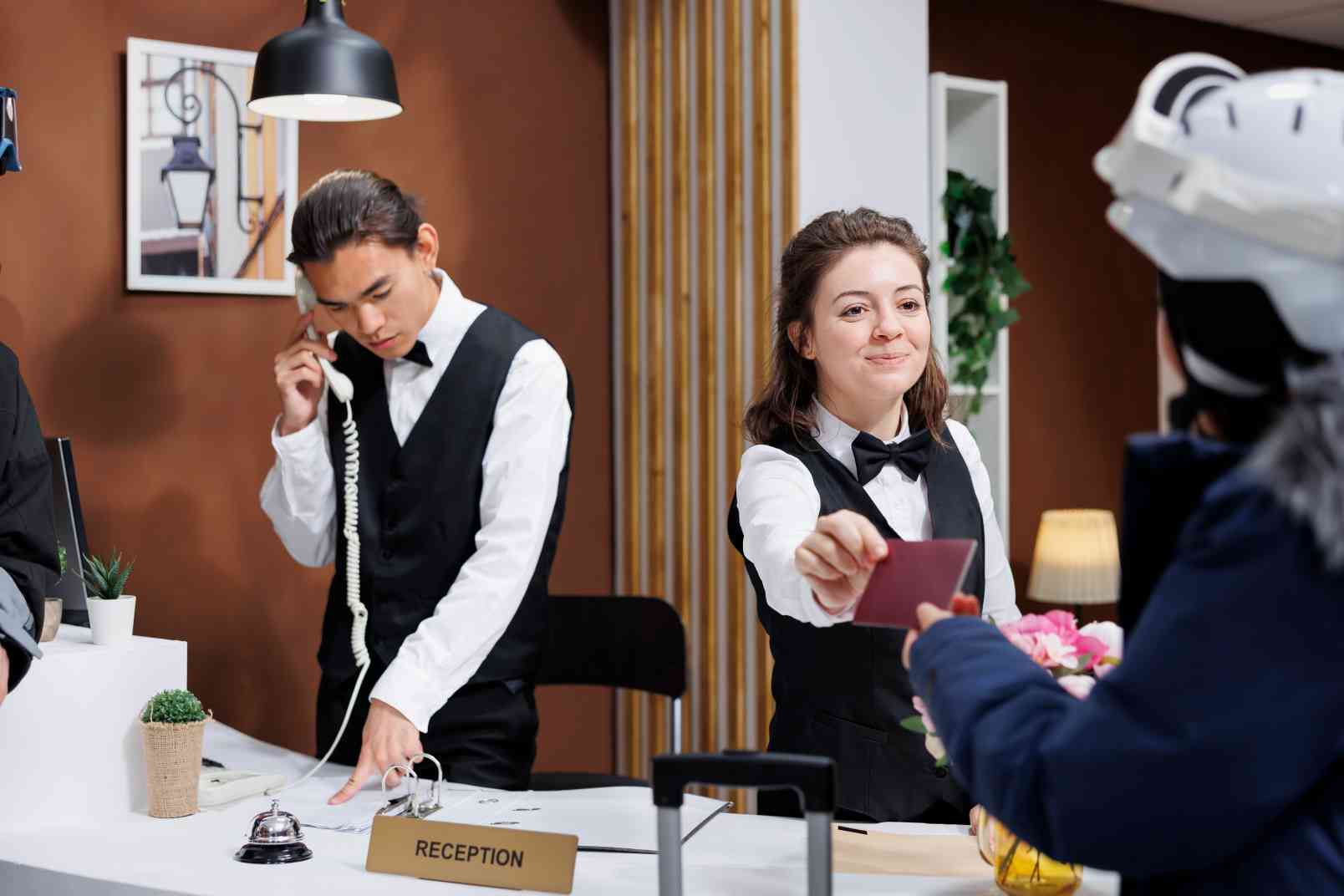
Role of Technology in Modern Hospitality Education: Insights from Hotel Management Colleges in Delhi NCR
Introduction to Technology in Hospitality Education In hospitality education, technology incorporates digital tools that include…

Why 2026 Is the Best Year to Start a Hospitality Career
The service sector presents massive daily opportunities for dedicated and trained professionals today. Students want…

Top Hotel Management Colleges in Delhi NCR & Haryana
Delhi NCR and Haryana have some of the best colleges for hotel management, offering hospitality…

Hospitality Management vs Hotel Management: Key Differences
Students who are considering a career in the service industry frequently engage in the debate…

Top Career Options After Hotel Management – Jobs & Higher Studies
Hotel management is one of the most promising professions, offering several career options after hotel…

Top Career Opportunities in Hospitality Industry
Following a course in hotel management, there are several hospitality industry career opportunities. After completing…