
How to Improve Communication Skills for Campus Placement
Home / Soft Skills / How to Improve Communication Skills for Campus Placement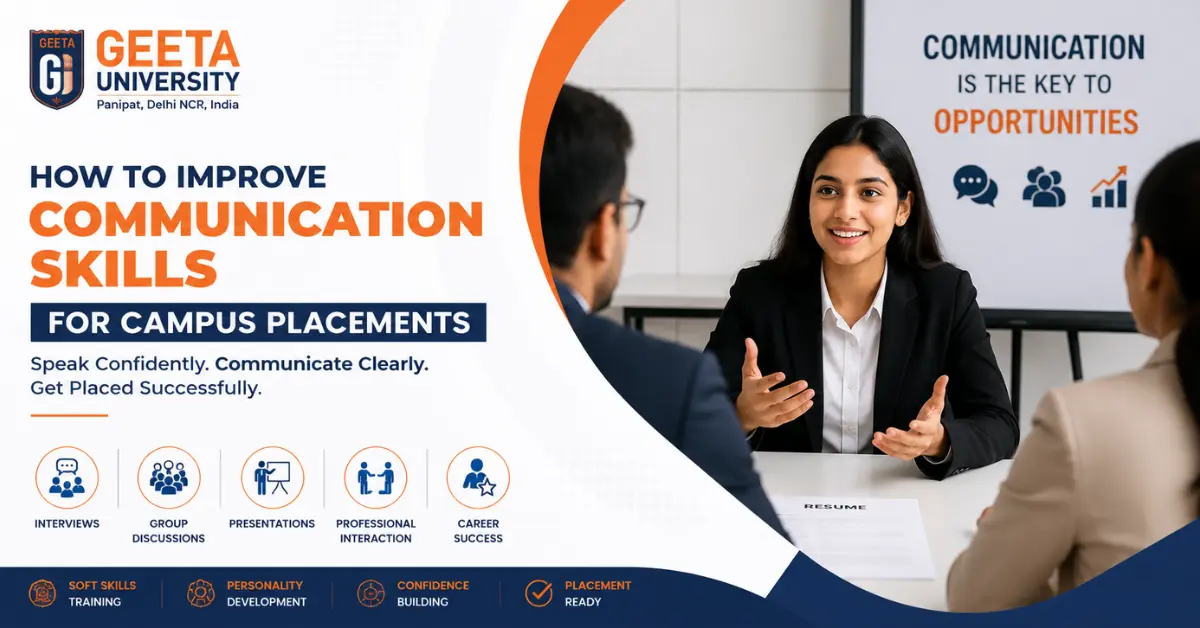
Communication skills can be refined for campus placements with the help of regular practice, confidence-building, public speaking, and other activities to upgrade effective speaking skills and understanding. Boosting vocabulary, professional posture, and gestures plays a crucial role as they contribute significantly.
What Are Communication Skills in Campus Placement?
Communication skills refer to a student’s ability to express ideas and be confident during interviews, group discussions, presentations, and professional interactions. These skills include verbal communication, like speaking and listening, and non-verbal communication, which includes body language, eye contact, posture, and facial expressions.
|
Aspect |
Verbal Communication |
Non- Verbal Communication |
| Meaning | Spoken or written words | Body language, gestures, and expressions |
| Method | Convey information via words | Convey information via emotions, attitude, confidence, etc. |
| Purposes | Improves speaking and professional skills | Shows confidence, positive impression |
| Examples | Interviews, Group discussions, and presentations | Eye contact, smiling, nodding, etc. |
| Key Benefit | Enhances clarity, proficiency | Credibility and professionalism |
Strong verbal and non-verbal communication skills help improve communication skills for placement. Focusing on communication skills for a job interview helps candidates build professionalism, improve interaction skills, and create a positive impression on recruiters.
People Also Read:
Why Do Communication Skills Matter During Campus Placements?
Communication skills matter during campus placements because recruiters evaluate how professionally candidates communicate. Students improve their communication skills for placement to create a stronger impression and to perform better during the hiring process.
| Importance of Communication Skills | How it helps in Placement |
| Supports Teamwork and Collaboration | Helps students to communicate better in workplace environments |
| Builds Confidence | Helps students to speak professionally and answer confidently |
| Enhances Interview Skills | Improves listening skills, clarity, and interaction |
| Develops Professional Behaviour | Promotes etiquette, professionalism |
| Improves Group Discussion | Helps students share thoughts openly and participate actively |
| Builds Presentation Skills | Creates engaging and intelligible presentations |
Which Communication Skills Do Recruiters Look for?
Recruiters look for distinguished communication skills such as speaking ability, active listening, confidence, and positive body language, etc. They also look at how candidates communicate during interviews, group discussions, etc.
Clear Speaking Ability
Recruiters look for candidates who can clearly and professionally express their thoughts. Students who have learned speaking skills can answer this professionally during interviews or discussions.
Active Listening
In active listening, a candidate grasps instructions and carefully responds. It demonstrates professionalism and effective teamwork skills in interviews and group discussions.
Confidence And Body Language
Candidate’s body language, eye contact, and posture create a first impression. Also, hiring managers look for confidence through non-verbal communication.
Email And Presentation Skills
Professional email writing and effective presentation skills are important in workplace communication. They help students communicate ideas effectively in formal settings
English Speaking Skills For Freshers
Speaking the English language helps to communicate fluently during placement rounds. For English speakers, they can practice regularly and improve pronunciation, vocabulary, and confidence.
Soft Skills Development
Soft Skills, such as teamwork and problem-solving, are highly valued. These skills help students interact professionally. Importance of Soft skills development for college students improves professional interaction, workplace behaviour, and communication in the corporate sector.
Teamwork or Coordination
Hiring managers look for candidates who can contribute to a team and work in an effective manner. These skills encourage candidates to share thoughts confidently and professional communication or interaction skills. Recruiters value candidates who can collaborate with team members and align in different professional workspaces.
Decision-Making Abilities
The potential to think critically and analyse situations is highly recommended in corporate roles.
Decision-making abilities assist students in solving challenges professionally and in making the right choice in difficult situations.
How Can You Practise Communication Skills at Home?
To improve communication skills for placement, candidates can practise speaking, listening, and professional communication regularly at home. Daily practice improves confidence, fluency, body language, and overall communication abilities to perform better at interviews and group discussions.
| Practice Method | How It Helps |
| Mock Interviews | Prepares students for professional communication and placement interviews |
| Loud Reading Practice | Improves pronunciation, speaking skills, and clarity. |
| Mirror Practice | Boosts confidence, facial expressions, and body language. |
| Watching English Podcasts, Videos or Movies | Improves listening skills, vocabulary, and communication style |
| Record Your Voice | Helps identify speaking errors and improves clarity |
| Group Discussion | Develops communication and teamwork |
| Writing Professional Emails | Improves formal writing skills and communication |
Which Common Communication Mistakes Should Students Avoid?
Students should be aware of common communication mistakes which reduce confidence, clarity and professionalism during campus placements.
- Speaking too fast or too slow, which interferes with clarity and comprehension.
- Excessive use of filler words like “um,” “like,” and “you know.”
- Bad body language, like avoiding eye contact or slouching.
- Not listening properly and then speaking in GDs or interviews.
- Communication in a more informal way than professional communication.
How Does Geeta University Help with Communication Skills Training?
Geeta University, located in Panipat, Haryana, India, supports students in improving their communication skills for placement through AI-enabled learning, Internships, Live projects, and practical exposure.
Students here get trained at Geeta Finishing School, the university’s dedicated career-training division, which offers professionally driven programs that focus on communication skills, personality development, and interview-focused training.
Geeta Finishing School adheres to a 3-stage training model to train students for professional career success.
First Model- Communication & Confidence
- Spoken English & Pronunciation
- Email & Business Writing
- Public Speaking & Presentations
- Body Language & Interpersonal Skills
Second Model – Employability Skills, Covering
- Resume & Cover Letter Writing
- Aptitude & Reasoning Training
- Group Discussions & Case Studies
- Workplace Behaviour & Etiquette(MBTI Assessment)
Third Model- Placement & Life Skills
- Mock Interviews (HR + Technical)
- Corporate Grooming & Attire Etiquette
- Stress Management & Leadership Workshops
- Decision-Making Simulation
Geeta Finishing School is known for its strong placement outcomes, including a 60% rise in placement due to GFS modules, an average salary enhancement of ₹4.5 LPA for GFS-trained students, and 87% of recruiters rated GFS graduates as professionally prepared. With scholarships, worldwide opportunities, 550+ recruiters, and packages up to 40 LPA, Geeta University Campus Placement 2026 prepares students for professional success with confidence, communication skills, and real-world exposure.
Geeta University makes sure that regardless of every student’s course, students must gain a structured training in vital skills for employability and communication. It is a core part of the curriculum to build a polished personality, and learning should not be limited to academics but also to practical skills and job preparedness.
Conclusion
Communication skills are essential for campus placements, to express their thoughts clearly and confidently during Interviews, GDs, and Presentations. Verbal and non-verbal communication, soft skills and English fluency are essential for a professional image to be considered for a good placement. Daily practice and awareness can improve communication skills for placement.
Frequently Asked Questions
The Importance of soft skills development for college students is to improve communication skills for placement, as it boosts employability, enabling them to work, adapt to new environments, ensuring success
The 5C’s of Communication are: Clear, Concise, Concrete, Correct, and Complete.
Public relations specialist, sales representative, and corporate trainer are the best jobs for Communication skills.
A group discussion is a structured conversation where a small group of individuals exchanges ideas and analyses a topic within a timeframe.
Some daily habits to enhance communication skills include active listening, practising conciseness, paying attention to nonverbal cues, and maintaining positive, open body language.
Related Blogs

Importance of Communication and Soft Skills in Every Career
In today’s dynamic economy, higher education and technical skills are not sufficient to ensure career success….
Degree or Short-Term Courses: Pros, Cons & Career Opportunities
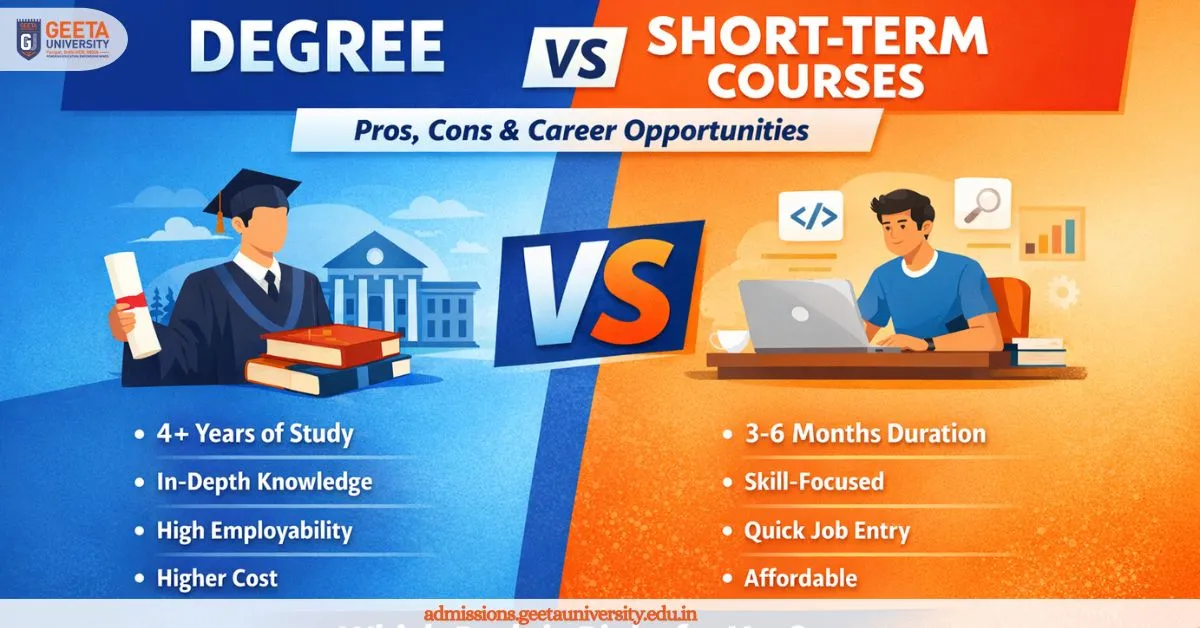
Students often face confusion when choosing between a degree or short-term course. Both options support…