.webp)
Program
B.Tech (Hons) in CSE with specialization in Data Science & Business Analytics with HCL
Duration
4 Years ( 8 Semesters )
Eligibility
10+2 with Physics and Mathematics + one subject from Chemistry, CS, Electronics, IT, etc. with 55% marks or 55% in D.Voc. stream in allied fields.
Data Science and Analytics is a new, rapidly growing field that comprises a set of tools and techniques for extracting useful information from data. The program encompasses Data Science as an interdisciplinary, problem-solving-oriented specialisation that learns to apply scientific techniques to practical issues.
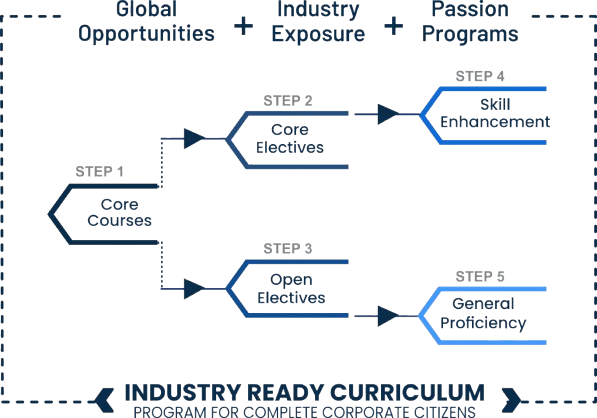
The B.Tech. Data Science & Business Analytics with HCL course curriculum involves a blend of data inference, algorithm development, and technology to analytically solve complex problems. The programme imparts a confluence of skills in three major areas of mathematical expertise, technology hacking skills, and business strategy and acumen.
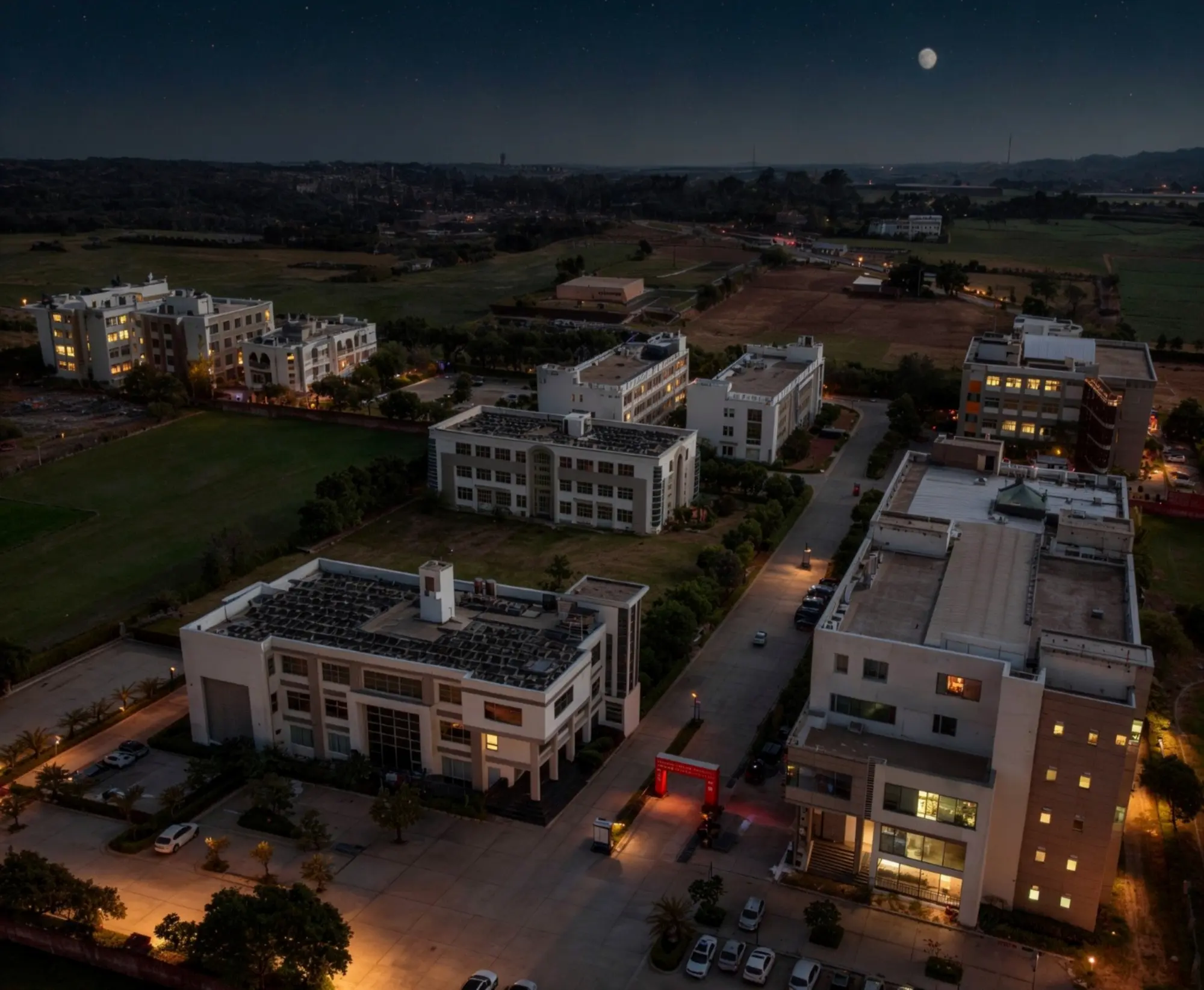
The B.Tech. Data Science & Business Analytics degree at Geeta University serves as the backbone of this data revolution. Data Science emphasizes extracting actionable insights via advanced statistical procedures, algorithms, and machine learning models. Business Analytics implements these insights to solve specific business concerns, improve efficiency, and inform strategic decisions. Coming together, they form a powerful combination that empowers businesses to be better, faster, and more future-ready.
Read More ↓
Enquire Now

Head
Dr. Meenu Gupta (Stanford/Elsevier’s Top 2% Scientist 2025) is a Professor, Associate Dean Research & Outreach, and Head of the School of Computer Science & Engineering, Geeta University, Panipat, India. She has completed her Postdoctoral Fellowship from MIR Labs, USA, and holds a Ph.D. in Computer Science and Engineering from Ansal University, Gurgaon (2020). She has also been recognized among the Top 5% Scientists in the Global Scientific Index and received the IEEE Luminary of Discovery Award – Best Research for her research contributions. With more than 17 years of teaching and research experience, her areas of expertise include Artificial Intelligence, Machine Learning, Intelligent Systems, Data Mining, Image Processing, Smart Cities, Data Analytics, and Brain–Machine Interaction (BMI). Dr. Gupta has edited 22+ books, authored four engineering books, and published over 250 research papers in reputed international journals and conferences, along with 45+ book chapters. She actively serves as a reviewer for several high-impact journals and holds leadership roles in IEEE and ISTE. She has successfully organized numerous IEEE technically sponsored international conferences, contributing to global research outreach, innovation, and academic collaborations.
COO - GTH
Pankaj Bajaj is the Chief Operating Officer of Geeta Technical Hub (GTH), Geeta University, with 18+ years of experience in academic leadership, technical training, and career readiness. He leads university-wide initiatives in emerging technologies, industry collaboration, skill development, and student placements. His work focuses on building industry-aligned technical programs and creating career pathways in areas including AI/ML, Cybersecurity, Data Science, Full Stack Development, and Cloud Computing. He leads technical training teams, industry partnerships, internships, hackathons, and placement-readiness initiatives across the University.
Assistant Professor
Engineering Physics and Physics-related courses for undergraduate engineering and technology programmes Published more than 10 research papers in academic/research journals and publications. Actively engaged in research and scholarly activities in Physics and related interdisciplinary areas.Presented Papers in more than 20 conferences 6 Patents to her credit, reflecting active involvement in innovation and research 3 Books published. Actively contributes to academic evaluation, research, mentoring, and scholarly activities.
Assistant Professor
Jayant is an Assistant Professor with a strong specialization in Full Stack Flutter Development, bringing practical & technical expertise into the classroom. Currently teaching Decoding Data and AI & Data Science to BCA first-year students, Jayant focuses on making complex technical concepts accessible through clear explanations, diagrams, and real-life examples. As someone at the start of their academic teaching career, Jayant is dedicated to continuous learning and professional growth, combining hands-on development experience with an evolving pedagogical approach. Jayant is helping to students, build a strong foundation in data concepts and artificial intelligence while staying updated with the latest trends in mobile application development and data science.
Assistant Professor
I Isha Dhingra an Assistant Professor and academic professional with 4+ years of experience in teaching, mentoring, academic coordination, and student development. My areas of interests include Artificial Intelligence, Machine Learning, Natural Language Processing, Data Science, and Computer Science. I am currently pursuing Ph.D., with research interests in Indian Sign Language, speech-to-sign-language generation, and AI-based accessibility solutions. I have 4 Scopus-indexed conference papers and 1 published book chapter to my credit. I am actively involved in curriculum implementation, student mentoring, academic coordination, placement activities, and research.
Assistant Professor
Jyoti Malik is a Computer Science professional with an MCA and BCA, having experience in academia and the IT industry. She has approximately 2.5 years of teaching and 1.5 years of industry experience in IT and Cyber Security. Her areas of expertise include Cyber Security, Digital Forensics, Network Security, Cyber Crime Investigation, and emerging technologies. She is Microsoft Certified in Security, Compliance, and Identity Fundamentals (SC-900). Her research interests focus on Artificial Intelligence and Cyber Security. She has published 3 research papers and contributed 2 book chapters in emerging areas of AI, Cyber Security, and related technologies. She is actively involved in teaching, mentoring, and academic coordination.
Assistant Professor
Kriti Gupta is a PhD Scholar in Computer Science and Engineering, with an M.E. in CSE specializing in Artificial Intelligence and Machine Learning. She has over 2.2 years of experience as an Assistant Professor, teaching and mentoring postgraduate students. Her research interests focus on Artificial Intelligence, Deep Learning, Computer Vision, Medical Image Segmentation, and 3D Reconstruction. Her research work focuses on developing intelligent deep learning frameworks for medical imaging, anatomical reconstruction, image segmentation, and AI-driven applications. She has contributed to 11 published research articles in IEEE and CRC Press publications and holds 2 published Indian patent applications, including an AI-based system for 3D reconstruction of cardiac anatomy from 2D angiogram images.
Sr. Technical Trainer
Bhanu Kapoor is an experienced and highly dedicated Senior Technical Trainer with over six years of professional and teaching experience in the field of computer science and technical education.Throughout a distinguished career, he has focused on empowering students and professionals by bridging the gap between theoretical computer science and practical software development. He is currently delivering a comprehensive course on programming and logic building, helping a learner develop a strong analytical skill and coding proficiency. His core area of specialization lies in an advanced programming concept and Data Structure and Algorithm (DSA), which is essential for modern technical problem-solving and an engineering career. As a Senior Technical Trainer, he is committed to designing an effective curriculum structure, mentoring an aspiring developer, and fostering a robust environment for technical learning and skill development.
Technical Trainer
Specialization: Data Structures & Algorithms (DSA) and Problem Solving Professional Background & Achievements: Experienced Backend Developer proficient in Spring Boot, REST APIs, JPA/Hibernate, MySQL, and JWT authentication. Conducted technical training sessions across 10+ premier engineering colleges, mentored students for placements via mock interviews, and served as a hackathon judge. Certified in Full Stack Development (JSpiders) and NPTEL Problem Solving in C (IIT Kharagpur).
Technical Trainer
Himanshu Arora is a Technical Educator with around 5 years of experience in technical training and education across universities including Parul University, Dev Bhoomi Uttarakhand University, GLA University, and Geeta University. He has trained 2,000+ students in Artificial Intelligence, Machine Learning, Data Science, Python, R, DSA with C, MERN Stack, Data Visualization, Power BI, and Tableau. He contributes to academic coordination, practical training, student development, and industry-oriented learning initiatives. He holds certifications in Oracle Agentic AI, Data Science, and Data Analytics. His professional interests include Generative AI, Agentic AI, Prompt Engineering, emerging technologies, and practical, industry-focused technical education.
Technical Trainer
I am Manikanta Kumar Thontepu, a Technical Trainer with 2.5+ years of experience in Data Analytics and technical education, including roles as Data Analyst at Aditya Innovation Centre and Axion Ray. I currently teach AI, Machine Learning, Data Science, Scala for Data Science, AI for Business, AIML for Finance, AI-enabled HRM & People Analytics, and related laboratory courses. My expertise includes Python, SQL, Data Analytics, Machine Learning, Deep Learning, NLP, Power BI, Excel, Scala, and Vibe Coding. I have mentored 500+ students, developed AI/ML solutions, built Power BI dashboards, and worked on academic data analytics. My certifications include Pearson IT Specialist – Python, AWS Cloud Practitioner, Cloud & DevOps, GitHub Foundations, Azure AI Engineer, Google Cloud Architect, and Machine Learning & Data Analytics. I have also presented research at ICITSM 2025.
Technical Trainer
Technical Trainer
My name is Mohammad Aslam, and I am currently working as a Technical Trainer at Geeta University, Panipat, Haryana. I have more than 11 years of professional and teaching experience in the field of software development and technical training. I have worked as a Java Developer and Java Corporate Trainer, and have conducted numerous technical training programs and workshops for universities and engineering colleges across India.I am also pursuing a Ph.D. in Computer Science with a research focus in the Cloud Computing domain. My professional interests include programming, cloud computing, artificial intelligence, and secure computing.
Technical Trainer
Paras Jangid is a Technical Trainer (Cybersecurity) at Geeta University, with 4+ years of experience in cybersecurity training, ethical hacking, digital forensics, OSINT, cyber threat intelligence, and network security. He is a Master Trainer associated with CDAC, MeitY, Government of India, and has trained students and professionals through hands-on, industry-oriented cybersecurity programs. His expertise includes DFIR, SOCMINT, online profiling, incident reporting, malware analysis, and cybercrime investigation. He contributes to cybersecurity education, technical skill development, hackathons, industry initiatives, and career readiness at the University. He holds certifications including CHFI, CDFA, CEH, MCYSA, and Google Cybersecurity.
Technical Trainer
Technical Trainer
My name is Ram Mohan Dixit, and I am currently working as a Technical Trainer. I have over three years of professional experience in technical training and skill development. I currently teach both Front-End Development and Back-End Development, helping students gain practical knowledge of modern web technologies. My primary area of specialization is the MERN Stack—MongoDB, Express.js, React.js, and Node.js—which enables me to provide comprehensive training in Full-Stack Web Development.Additionally, I am proficient in teaching Artificial Intelligence concepts and tools. I also specialize in placement-oriented training, including technical interview preparation, aptitude development, resume building, mock interviews, and preparing students according to current industry requirements. My objective is to equip students with practical technical skills, confidence, and professional knowledge to improve their career and placement opportunities.
Technical Trainer
I am Ronak Duggar, Technical Trainer at Geeta Technical Hub, Geeta University, with 6+ years of experience in technical training and full-stack development, having trained 1000+ students globally. I teach Front End Development, Back End Development, and Seminar & Project classes, specializing in Full Stack Web Development, AI/ML, Geospatial GIS, IoT & Hardware Systems, and Academic Leadership. I serve as IEEE, Innovation, and IPR Cell Coordinator, and Session Chair at ICCSM-2025 & INCSTIC-2025, and hold 13 patents, 5 international book chapters, 7 conference papers, and 9 Scopus publications with 131 citations. More information is available at ronakduggar.com.
Technical Trainer
Sri Sai Sateesh Chandra Ravula is a Technical Trainer specializing in Artificial Intelligence and Machine Learning. He has experience as a Generative AI Intern at ToriMinds and Technical Hub. His areas of expertise include Machine Learning, Natural Language Processing (NLP), OpenCV, AI for BBA, Statistical Modelling, and Data Reasoning. He holds several global certifications, including Microsoft Azure AI Engineer Associate, GitHub Administration, Oracle Certified Generative AI Professional, Oracle Certified Generative AI Associate, Oracle AI Foundations Associate, and Dell Technologies Generative AI Foundations. He is passionate about empowering students with practical, industry-relevant AI and data-driven skills.
Technical Trainer
Technical Trainer and Full Stack Developer with 3+ years of experience in Full Stack(MERN) development, technical training, and industry-oriented education. Experienced in delivering hands-on training in Python, Java, C/C++, MERN Stack, Flutter, and Android Development through practical, real-world projects. Previously I was in GLA University, where I contributed to technical training and student skill development. Skilled in developing scalable applications, mentoring learners, and designing job-oriented training programs focused on practical implementation, problem-solving, and industry readiness
Technical Trainer
Experienced in delivering practical, project-based training in Web Development and Full Stack technologies, with a focus on hands-on learning and industry-oriented development practices.3 years of professional experience as an Associate Software Engineer at Commercev3, specializing in e-commerce web application development.Frontend Development, HTML, CSS, JavaScript, React, and Full Stack Web Development.MERN Stack Development, Frontend Development, Full Stack Web Applications, E-commerce Web Applications, and Industry-Oriented Technical Training.Student mentoring, practical coding, project development, problem-solving, and placement-oriented technical training
Technical Trainer
I am a Technical Project & Program Management professional with experience across government projects, EdTech, technical training, IoT, robotics, embedded systems, and software development. I specialize in project execution, team leadership, stakeholder management, technical training, and operational excellence. I managed government and IIT Mandi–associated initiatives, including MeitY and Skill India programs. My technical expertise includes C, C++, Java, Embedded C, DSA, IoT, Robotics, RPA, Arduino, Linux, and software development tools. I also bring experience in course development, public speaking, process optimization, and technology-event management, combining technical knowledge with strong leadership and execution capabilities.
AI Trainer
Experience in AI engineering, Generative AI, Agentic AI, LLMs, RAG, and Machine Learning; currently teaching and mentoring students in Generative AI and Agentic AI.Generative AI, Agentic AI, LLMs, RAG, Prompt Engineering Area of Expertise: LLMs, RAG, Agentic AI, NLP, Machine Learning, LangChain, LangGraph, Azure AI, and AI application development Achievements/Certifications: Published research on Interpretable ML; Microsoft Certified Azure AI Engineer Associate and Oracle AI Vector Search Certified Professional.
AI Trainer
IOT Trainer
I am working as an IoT Trainer with hands-on experience in IoT, Robotics, Arduino, ESP32, Electronics, and Automation. I focus on practical and project-based learning, helping students understand technology through real-world applications. I have conducted workshops, guided student projects, and contributed to innovation activities and technical events.
Assistant Professor
Ms. Rakhi Chauhan is an Assistant Professor and PhD researcher specializing in Deep Learning, CNN Benchmarking, Fake Face Detection. She has authored 10+ research papers and 20+ book chapters published in reputed journals, conferences, and edited volumes.
Assistant Professor
Published Research Papers in Computer Science; Focused on innovative teaching and academic excellence.
Assistant Professor
Ms. Radha Gautam is an Assistant Professor with expertise in Computer Science and Engineering. She is dedicated to teaching, research, and academic excellence, with interests in emerging technologies, artificial intelligence, and software development. She has contributed to scholarly research through publications and actively participates in academic and professional development activities. Her commitment to student learning and innovation makes her a valuable contributor to higher education.
Technical Trainer
Technical Trainer
Nagendra Kishore Girajala Project Manager Subjects/Courses currently being taught: OS, Cloud Computing Area of Specialization/Expertise: OS, Cloud Computing, Data Engineering Any relevant achievements, certifications, research work, or other professional details: Google Cloud Associate Cloud Engineer, Snowpro Associate, GitHub Copilot, Excel
Software Developer
Technical Trainer
My name is Shivshankar Kumar Chaudhary, and I am working as a Technical Trainer with 2.5 years of professional experience in technical education and training. I currently teach Data Structures and Algorithms (DSA), focusing on developing students’ problem-solving, programming, and logical thinking skills. My area of specialization and expertise is Data Structures and Algorithms, including algorithmic thinking, coding, and efficient problem-solving techniques. I have a strong interest in competitive programming and continuously work on enhancing my technical skills. One of my notable achievements is becoming a Knight of LeetCode, demonstrating my proficiency in coding and algorithmic problem-solving.
We believe that financial constraints should not limit access to quality education. At Geeta University, we offer scholarships based on:
HImankk Shrama
Learning Data Science and Business Analytics here has been a valuable experience so far. The course structure is practical and industry-focused, helping me understand analytics concepts better and develop confidence to work on real-world data problems
Parvjeet Singh
My journey in this Data Science and Business Analytics course has been very engaging. The combination of data analysis, tools, and business concepts helped me build strong understanding, while practical exposure made learning more relevant and useful.
Nikhil Kumar
Studying Data Science and Business Analytics here has been a great journey till now. The curriculum covers both technical and business aspects, and the faculty guidance helped me understand how data can solve real-world problems effectively.
Tushar Sharma
My experience in Data Science and Business Analytics here has been really insightful so far. The course helped me understand data-driven decision making, and the practical projects made learning more interesting while improving my analytical thinking and technical skills
HImankk Shrama
Learning Data Science and Business Analytics here has been a valuable experience so far. The course structure is practical and industry-focused, helping me understand analytics concepts better and develop confidence to work on real-world data problems
Parvjeet Singh
My journey in this Data Science and Business Analytics course has been very engaging. The combination of data analysis, tools, and business concepts helped me build strong understanding, while practical exposure made learning more relevant and useful.
Nikhil Kumar
Studying Data Science and Business Analytics here has been a great journey till now. The curriculum covers both technical and business aspects, and the faculty guidance helped me understand how data can solve real-world problems effectively.
Tushar Sharma
My experience in Data Science and Business Analytics here has been really insightful so far. The course helped me understand data-driven decision making, and the practical projects made learning more interesting while improving my analytical thinking and technical skills
After this degree, you can explore roles like data scientist, analytics consultant, business intelligence analyst, data engineer, or predictive modeller in companies that rely on data for strategic decision-making
Top recruiters include:
Geeta University is one of the greatest places to study a B.Tech. Data Science & Business Analytics course because it offers a complete education that is useful in the field. With its focus on hands-on learning, cutting-edge facilities, and knowledgeable teachers, the university makes sure that students get real-life experience with big data and advanced analysis tools.
Geeta University offers a strong learning setting that trains students to solve difficult business problems, whether they are in a graduate program in business analysis or data science. This commitment to greatness makes sure that grads have all the skills they need to do well as business analysts and data scientists.
HIGHEST PACKAGE
RECRUITERS
JOB OFFERS
Find answers to common questions about eligibility, courses, placements, and campus facilities.
Founded in 1985, the Geeta Group of Institutions has emerged as a major educational hub with institutions spanning school education to doctoral programs. SPBSB benefits from the integrated ecosystem of:
AI-enabled multidisciplinary campus
Communication & Corporate Readiness
Advanced Technology, Certifications, and Industry Skills