Geeta University official logo

M.Sc. Nutrition & Dietetics


Program

M.Sc. Nutrition & Dietetics

Duration

2 Year

Eligibility

Candidate must have passed Bachelor in Nutrition and Dietetics (Honours)/ B.Sc. Nutrition and Dietetics (Honours)/ B.Sc. Food and Nutrition on regular mode from recognised university.

M.Sc. Nutrition & Dietetics

MSc Nutrition and Dietetics is a two-year program at Geeta University. It is a competency-based curriculum that combines didactic coursework with supervised clinical experience. The curriculum emphasizes nutrition counseling and behavior change. It also emphasises interprofessional teamwork, advocacy, and service. Students must complete the program within seven academic quarters. 

The curriculum in a nutrition program prepares students to evaluate the latest research in the field, solve problems, and communicate effectively. Students study with experienced faculty involved in research, education, administration, professional practice, and communication. Practicum experiences are usually required in a professional setting and can include large urban hospitals, sports nutrition practices, and clinical research centers at teaching hospitals. 

In addition to the coursework, students may also choose to pursue a role as a public health planner, dietitian, or food chemist. Many students choose to become teachers or health coaches. Whether they decide to become a dietitian or public health planner, a MSc Nutrition and Dietetics degree is an excellent option.

Important Takeaways
  • The MSc Nutrition Dietetics is a 2-year postgraduate program.
  • The MSc Nutrition and Dietetics program combines in-depth theoretical knowledge with practical learning in food science and nutrition to support health and disease prevention.
  • Students learn under experienced faculty members who bring strong academic expertise, research exposure, and industry-oriented insights.
  • Extensive hands-on training in advanced laboratories equips students with practical skills in food analysis, processing, and nutritional assessment.
  • Research-driven learning enables students to develop critical thinking, data interpretation, and scientific writing skills for academic and professional growth.
  • Strong industry linkages through expert sessions, workshops, and field exposure help students build networks and explore diverse career opportunities.
Geeta University MSc Nutrition and Dietetics Program– Subjects

Geeta University provides practical training, internships, and expert faculty guidance for MSc Nutrition Dietetics course. GU ensures that students gain real-world experience in their chosen specialization.

Here are the elective details for the GU M.Sc. Nutrition & Dietetics course: 

  • Advanced Human Nutrition
  • Clinical & Therapeutic Dietetics
  • Nutritional Biochemistry
  • Food Safety & Toxicology
  • Research Methodology & Biostatistics
  • Food Product Development
  • Sports & Pediatric Nutrition
  • Diet Planning & Counseling
  • Entrepreneurship in Food & Wellness
  • Hospital Internship & Dissertation
Learning Outcomes
  • Prescribe complex diets for medical conditions
  • Conduct nutrition-based research and development
  • Analyze food labels and nutritional interventions
  • Promote evidence-based wellness strategies
  • Build health startups in nutrition science
Geeta University MSc Nutrition and Dietetics Program Admission Process
  • Eligibility Criteria: Candidates for a MSc Food Nutrition and Dietetics program must have B.Sc. in Home Science/Life Sciences/Nutrition/Biotech with 50% marks.
Benefits of a MSc Nutrition and Dietetics degree

Learners pursuing a Master of Science (M.Sc.) in Nutrition and Dietetics will learn how to work with various nutrition issues, such as obesity, food access, mental health, and more. These students can also specialize in specific areas, such as sports nutrition or pregnancy health. 

A MSc Nutrition and Dietetics program at the Geeta University focuses on advanced studies of nutrition, including the relationship between food and human health. Students in the program will be prepared to work in health care settings, including hospitals and medical clinics, as well as in industry. 

A Master of Science in Nutrition and Dietetics degree will allow you to gain practical experience. During the program, students will complete a capstone experience, which is typically a master's thesis. Some schools rely on final projects for this component, while others will include an internship. 

Read More ↓

Enquire Now

DESIGN YOUR OWN DEGREE WITH GU

Degree Design

Meet Our Mentors

Guiding Futures with Expertise, Experience & Empathy

Dr Sonal (Custom)
Dr. Sonal

Assistant Professor, Ph.D. (Food and Nutrition)

Expert in Food Product Development and Evaluation, Hospital & Industry Practices; Authored Books, Research Papers, Patents, and Book Chapters; H-Index: 8; Recipient of Best Teacher Award & Best Performer Award; Recognized contributor to innovation in food and nutrition.

Expert in Food Product Development and Evaluation, Hospital & Industry Practices; Authored Books, Research Papers, Patents, and Book Chapters; H-Index: 8; Recipient of Best Teacher Award & Best Performer Award; Recognized contributor to innovation in food and nutrition.

Nidhi Dangi (Custom)
Dr. Nidhi Dangi

Assistant Professor, Ph.D.

Gold Medalist in M.Sc. Food Technology; Recipient of Faculty Best Thesis Award (Ph.D.); Published 15 Papers, 2 Book Chapters, and 1 Book; H-Index: 8; Recognized for impactful academic research and innovation.

Gold Medalist in M.Sc. Food Technology; Recipient of Faculty Best Thesis Award (Ph.D.); Published 15 Papers, 2 Book Chapters, and 1 Book; H-Index: 8; Recognized for impactful academic research and innovation.

Swati - Passport size photo - 2024 - 94 KB (1)
Dr. Swati Mitharwal

Assistant Professor

Dr. Swati Mitharwal is an Assistant Professor (Nutrition and Dietetics) at School of Health &
Allied Sciences, Geeta University, Panipat. She holds a Ph.D. in Food Science and Technology
from the National Institute of Food Technology Entrepreneurship and Management (NIFTEM),
Kundli, an M.Tech. in Food Processing Technology from Guru Gobind Singh Indraprastha
University, Delhi, a B.Tech. in Food Engineering from Guru Jambheshwar University of Science
and Technology, Hisar. She also holds a postgraduate diploma in Food Safety and Quality
Management from IGNOU, New Delhi. She has over four years of combined experience in
academia and the food industry, wherein she worked at DCRUST, Murthal and in food
regulatory compliance and quality assurance for Mondelez International (Canada). She has
qualified UGC-NET (Home Science), ICAR-ASRB NET (Food Technology), and GATE, and
was awarded the UGC Junior Research Fellowship (JRF-SRF) and the NIFTEM Research
Fellowship during her doctoral studies. She has won third prize for oral pesentation at the 4th
International Conference on Food and Nutrition (2021), Singapore. Dr. Mitharwal has published
11 research papers in reputed international journals and 3 book chapters with leading
publishers. She has participated in many national and international conference, short term
courses and workshops. She is a life member of the Association of Food Scientists &
Technologists (India) [AFST(I)] and the Indian Society of Agricultural Engineering (ISAE). Her
research focuses on functional foods, novel food processing technologies, food dehydration,
cereal and legume processing and new product development.

Dr. Swati Mitharwal is an Assistant Professor (Nutrition and Dietetics) at School of Health &
Allied Sciences, Geeta University, Panipat. She holds a Ph.D. in Food Science and Technology
from the National Institute of Food Technology Entrepreneurship and Management (NIFTEM),
Kundli, an M.Tech. in Food Processing Technology from Guru Gobind Singh Indraprastha
University, Delhi, a B.Tech. in Food Engineering from Guru Jambheshwar University of Science
and Technology, Hisar. She also holds a postgraduate diploma in Food Safety and Quality
Management from IGNOU, New Delhi. She has over four years of combined experience in
academia and the food industry, wherein she worked at DCRUST, Murthal and in food
regulatory compliance and quality assurance for Mondelez International (Canada). She has
qualified UGC-NET (Home Science), ICAR-ASRB NET (Food Technology), and GATE, and
was awarded the UGC Junior Research Fellowship (JRF-SRF) and the NIFTEM Research
Fellowship during her doctoral studies. She has won third prize for oral pesentation at the 4th
International Conference on Food and Nutrition (2021), Singapore. Dr. Mitharwal has published
11 research papers in reputed international journals and 3 book chapters with leading
publishers. She has participated in many national and international conference, short term
courses and workshops. She is a life member of the Association of Food Scientists &
Technologists (India) [AFST(I)] and the Indian Society of Agricultural Engineering (ISAE). Her
research focuses on functional foods, novel food processing technologies, food dehydration,
cereal and legume processing and new product development.

Virtual Campus Tour

SCHOLARSHIPS AT GEETA UNIVERSITY

We believe that financial constraints should not limit access to quality education. At Geeta University, we offer scholarships based on:

  •  Merit/Percentage in Qualifying Exams
  •  National Level Entrance Exams (JEE, CUET, NEET, CLAT, and more)
  •  Social Responsibility
  •  Sports Performance    

GUTS

GEETA UNIVERSITY TEST OF SCHOLARSHIP
Geeta University (GU) strongly believes that monetary constraints should not be an obstacle for a student to have access to quality education. Geeta University Test of Scholarship (GUTS) provides students with an opportunity to reduce the financial burden and get up to 100% off on tuition fees based on their performance.

Student Testimonial

Student Testimonial

Highlights of Our Learning Spaces

Career opportunities after completing a MSc Nutrition and Dietetics program

Graduates of the MSc Nutrition and Dietetics program have diverse career opportunities in various sectors. Some potential career paths include:

  • Food Quality Assurance Manager
  • Nutrition Consultant
  • Food Scientist
  • Public Health Nutritionist
  • Product Development Specialist
  • Nutrition Writer/Blogger
  • Clinical Nutritionist
  • Food Research and Development
  • Wellness Coordinator
Why choose Geeta University for pursuing a MSc Nutrition and Dietetics degree?

The MSc Nutrition and Dietetics program at Geeta University offers futuristic-oriented, internationally competent specializations. These include clinical nutrition and dietetics, public health nutrition, nutrigenomics, and food safety and quality management. The program combines academic excellence with practical training, allowing students to gain hands-on experience through internships, research projects, and clinical placements.

Graduates with M.Sc. in Nutrition and Dietetics have diverse career options, including roles in clinical nutrition in healthcare settings, public health nutrition, nutrigenomic counselling, and food safety and quality management. Whether you are seeking a nutritionist course in Panipat or planning to enroll in a dietician course at GU. 

MSc Nutrition Dietetics at GU offers suitable courses and the ideal learning environment with adequate support for placements.

40 LPA

HIGHEST PACKAGE

550+

RECRUITERS

3500+

JOB OFFERS

Frequently Asked Questions

Find answers to common questions about eligibility, courses, placements, and campus facilities.

The current School page lists B.Sc. Hons. (Nutrition & Dietetics), M.Sc. (Nutrition & Dietetics) and Ph.D. (Nutrition & Dietetics).
Applicants should have passed 10+2 with Physics/Chemistry/Biology/Nutrition/Home Science/Mathematics/Commerce/Arts or a vocational subject, with English as one of the subjects, and at least 50% marks in the qualifying examination.
Yes. Commerce and Arts are among the eligible 10+2 backgrounds, subject to the stated marks and subject requirements.
Yes. Home Science is specifically listed among the eligible backgrounds.
Yes. Physics, Chemistry and Biology are explicitly listed among the eligible subjects.
The current School page states that applicants should have completed a recognised regular bachelor's degree in Nutrition and Dietetics/Honours, B.Sc. Nutrition and Dietetics (Honours) or B.Sc. Food and Nutrition.
The applicants should hold a postgraduate degree with at least 50% marks in Nutrition, Dietetics, Food Science & Technology, Home Science or a related discipline.
No, it is not required for the admission for the B.Sc. programme.
The B.Sc. Hons. programme is a four-year degree.
The M.Sc. Nutrition & Dietetics programme is a two-year postgraduate degree.
There is  a minimum duration of three years for Ph.D. in Nutrition & Dietetics.
The discipline combines nutrition science, human physiology, diet planning, clinical nutrition, food science and technology, public health, wellness and evidence-based approaches to improving health and preventing nutrition-related problems.
The Specialisation areas include diet planning, food science and technology and fitness management, while its broader curriculum also highlights clinical nutrition, public health, sports nutrition and nutraceuticals.
No. The programme combines scientific nutrition knowledge with clinical, community and food-industry applications, laboratory work, research and professional training.
Yes. Clinical nutrition is specifically highlighted as an area of practical exposure and a career pathway.
Yes. Food science and technology is included in the form of food-analysis laboratories and food-industry exposure.
Yes. The programme focuses on emerging areas such as sports nutrition and fitness management, along with certifications related to exercise and human-body fundamentals.
Yes. Nutraceuticals are specifically identified among the emerging areas covered through the School's new-age certification and skill-development focus.
Yes. Community service, nutrition camps, health drives and community healthcare awareness are highlighted as part of the student experience.
The School's case-based learning and clinical exposure are designed to help students apply nutrition concepts to practical situations and develop professional judgement.
Yes. Definitely, students will get strong clinical exposure through hospital internships and case-based learning. There will also be 2 industrial visits each semester for the students.
Yes. Food-analysis laboratories are specifically highlighted as part of the School's practical infrastructure.
There are modern laboratories available for areas including food analysis, microbiology and clinical nutrition.
The clinic provides a setting for students to develop practical diet-planning and nutrition-counselling skills under appropriate academic supervision, while connecting classroom knowledge with real nutrition-related cases.
Yes. The School specifically has an in-house Diet Clinic for hands-on training and community service.
Practical training is a major part of the School's model through modern laboratories, an in-house diet clinic, clinical exposure, case-based learning, internships, projects and community activities.
Yes. Internships are a key part of industry-aligned training, including hospital internships and exposure to nutritionists and food-industry professionals.
The School highlights hospitals, health organisations, food-industry settings and professional environments involving nutritionists. Specific internship partners can vary by cohort and should be confirmed for the relevant session.
The School states that it has industry collaborations supporting internships, industrial visits and expert sessions, and highlights clinical and food-industry exposure.
Yes. Industrial visits are explicitly mentioned among the School's industry-aligned learning opportunities.
Yes. The School highlights mentorship and internship exposure involving established nutritionists and food-industry professionals, along with expert sessions.
Yes. Student participation in nutrition camps and health drives is specifically highlighted on the School page.
Yes. Research centres, academic institutions, healthcare organisations and food and wellness industries can provide research-oriented opportunities, particularly for students who pursue advanced qualifications and research skills.
Potential areas include clinical nutrition, public health nutrition, food science, dietetics, sports nutrition, nutraceuticals, lifestyle disorders and other nutrition- and health-related topics, depending on faculty expertise and available projects.
Yes. Graduates can pursue postgraduate study such as M.Sc. Nutrition & Dietetics and, after meeting the relevant postgraduate and doctoral requirements, research pathways including Ph.D.
Yes. Publication support is specifically provided by the head of the department as part of the School's research-oriented approach. 
Project work and research-oriented learning are an imperative part of school. Specific undergraduate research opportunities depend on faculty projects, the academic calendar and the student's programme.
Yes. The School describes its curriculum as research-oriented, with project work and publication support, and it offers a Ph.D. in Nutrition & Dietetics.
Graduates can explore roles in clinical nutrition, hospitals, wellness organisations, food companies, public-health programmes, sports and fitness, corporate wellness, research and other nutrition-related sectors.
Yes. Hospital and clinical nutrition are among the major professional pathways highlighted by the School.
Graduates can pursue nutrition and dietetics roles subject to the qualification, employer criteria and any applicable professional or institutional requirements for the specific role.
Yes. Public Health is explicitly identified as a career pathway, including community nutrition and health-promotion activities.
Yes. Food Industry is specifically listed as a career pathway, supported by the School's food-science and food-analysis training.
Yes. Sports & Fitness is listed among the career pathways, and the School highlights sports nutrition and fitness-related learning.
Yes. Corporate Wellness is explicitly identified as a career pathway.
Yes. Government Sector is listed among the School's career pathways. Specific government posts may have additional eligibility, examination or registration requirements.
The School's webpage identifies government and national/international health organisations including FSSAI, FCI and ICMR-NIN among potential employment environments. Actual eligibility depends on the recruitment rules of each organisation.
Yes. Entrepreneurship is identified as a career pathway, and students can potentially build ventures in areas such as nutrition counselling, wellness, food products, health education or related services, subject to applicable professional and business requirements.
An M.Sc. can strengthen pathways in advanced clinical and community nutrition, research, teaching, specialised wellness and food-industry roles, subject to the specific job's qualification requirements.
The School highlights placement and career development through internships, industry exposure, professional mentoring and the University's broader career-support ecosystem. Individual employment outcomes depend on student skills, eligibility and recruiter requirements.
The School highlights certifications and skill development in emerging areas such as lifestyle disorders, sports nutrition and nutraceuticals. Its broader materials also reference nutrition essentials, sports medicine, exercise science, human-body fundamentals and supplements.
They allow students to understand nutrition in relation to physical performance, exercise, fitness and active lifestyles, opening additional pathways in sports and wellness settings.
Nutraceuticals connect nutrition with functional foods and health-related products, giving students additional awareness of an expanding area within food, wellness and nutrition industries.
Yes. The School's curriculum and certifications extend into public health, sports nutrition, food science, nutraceuticals, lifestyle disorders, fitness and entrepreneurship.
The School highlights experienced faculty with expertise spanning nutrition, dietetics, food industry, public health, biosciences, sport and exercise and related areas.
Students learn through classroom study alongside laboratories, the in-house Diet Clinic, hospital internships, case-based learning, projects, community activities and industry exposure.
Yes. Nutrition and dietetics is an allied-health discipline that allows students to contribute to prevention, wellness, clinical nutrition, food systems and public health without following the MBBS route.
The School combines an in-house Diet Clinic, modern food and clinical laboratories, hospital exposure, case-based learning, internships, industry visits, research projects, community health activities and emerging-area certifications.
Students should consider their interest in human health, food, biology and nutrition science, their comfort with practical and clinical learning, and whether they want to work in healthcare, public health, food, wellness, sports, research or entrepreneurship.
Yes. Unlike many health programmes, several backgrounds are eligible, including Nutrition, Home Science, Mathematics, Commerce, Arts and vocational subjects, along with PCB.
Nutrition is the broader science of nutrients, food and their relationship with health, while dietetics applies nutrition science to practical dietary planning and professional settings such as clinical and community care. The programme integrates both perspectives.
Yes. Lifestyle disorders are specifically identified as an emerging area, and nutrition plays an important role in prevention and management as part of multidisciplinary healthcare.
Yes. Students interested in research can build toward postgraduate and doctoral study and explore academic, healthcare, food-industry and public-health research.
No. Professional nutrition covers clinical nutrition, disease prevention, public health, food science, sports nutrition, community health, lifestyle disorders and evidence-based dietary management—not simply weight management.
The knowledge and skills can support international opportunities in healthcare, food, wellness and research, subject to the destination country's qualification recognition, professional requirements, registration and employer criteria.
Yes. The programme is intentionally positioned across clinical nutrition, community health and food-industry applications, giving students exposure to both healthcare and food-related career environments.

Legacy & Ecosystem

Founded in 1985, the Geeta Group of Institutions has emerged as a major educational hub with institutions spanning school education to doctoral programs. SPBSB benefits from the integrated ecosystem of:

Geeta University

AI-enabled multidisciplinary campus

Geeta Finishing School (GFS)

Communication & Corporate Readiness

Geeta Technical Hub (GTH)

Advanced Technology, Certifications, and Industry Skills
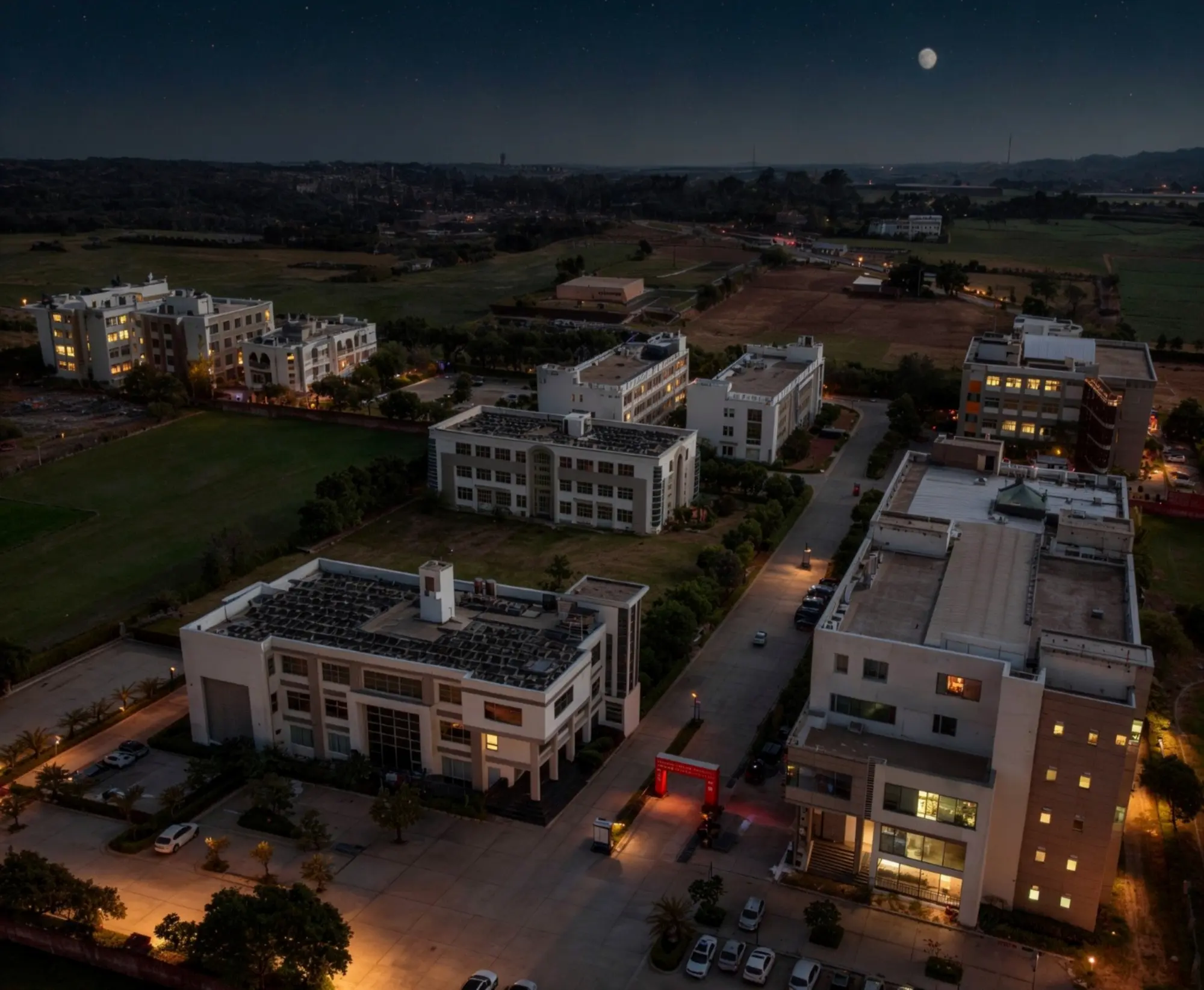
Geeta Group Campus