.webp)
SP Bansal School of Business (SPBSB), launched under Geeta University in Panipat, Haryana, stands as a leadership bastion nurturing seeds of greatness upholding human values and ethics in future business leaders. The B School is forged in the Illustrious Legacy of Geeta group of Institutions—Insight. Articulate. Innovate - Triangulating Holistic Excellence, triangulate to holistic excellence thriving within a top AI empowered university of Northern India.
SPBSB distinguishes itself as Panipat's top management school through agile, AI-powered education in Geeta University's world-first AI university setup. Unlike traditional programs, it revises curriculum semiannually with stakeholder inputs, ensuring latest theories and industry relevance.
Unique Value addition: The MBA program at SPBSB also delivers Global certifications (EC-Council, EY, Deloitte, Paytm, AWS, Cisco, IRM etc); and hands- on labs for AI, ML, Analytics, cybersecurity etc. Industry trainers simulate real world problems in every class every day refining the decision-making ability in students. This repeated problem solving also builds critical, creative, lateral and out of the box thinking in students thereby developing their ability to solve difficult problems through a rigorous and analytical process.
Enquire Now
“To be a globally competitive business school by developing visionary leaders, entrepreneurs, strategists and innovators who are in the forefront of creating great businesses, disruptive innovations and economic development to foster nation-building”
SP Bansal School of Business (SPBSB), established under Geeta University, Panipat, is a young, vibrant, and industry-anchored B-School committed to developing ethically grounded, technologically fluent, and analytically strong business leaders. Rooted in the 40-year legacy of the Geeta Group of Institutions, SPBSB functions within a future-ready, AI-enabled university ecosystem of North India.
Eligibility: Passed a Bachelor’s degree of minimum 3 years duration with at least 50% marks
Duration: 3/4 Years
Eligibility: Masters in relevant field with minimum 55% marks
Duration: 3 Years
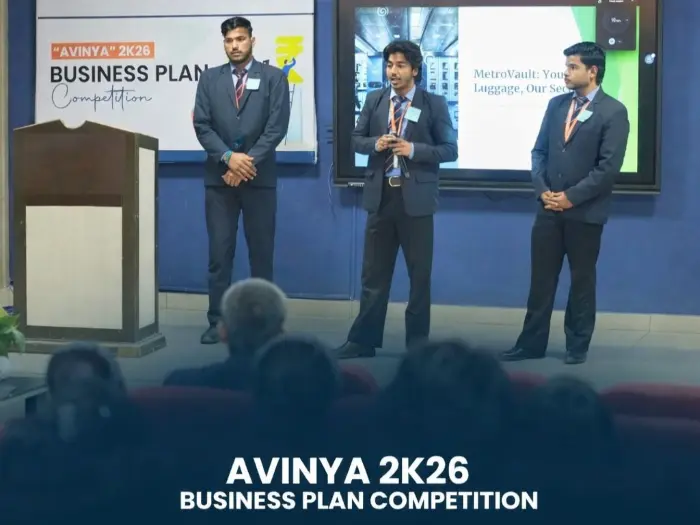
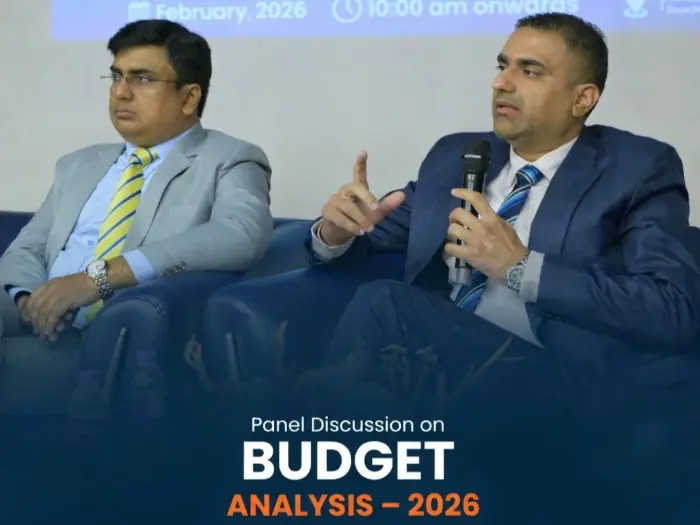
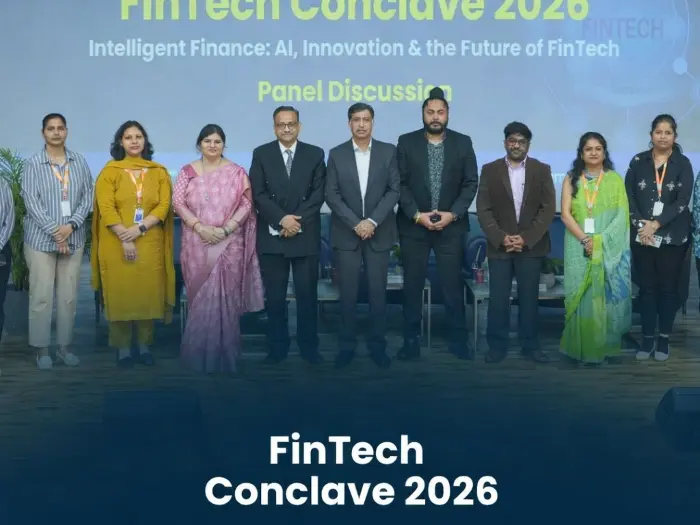
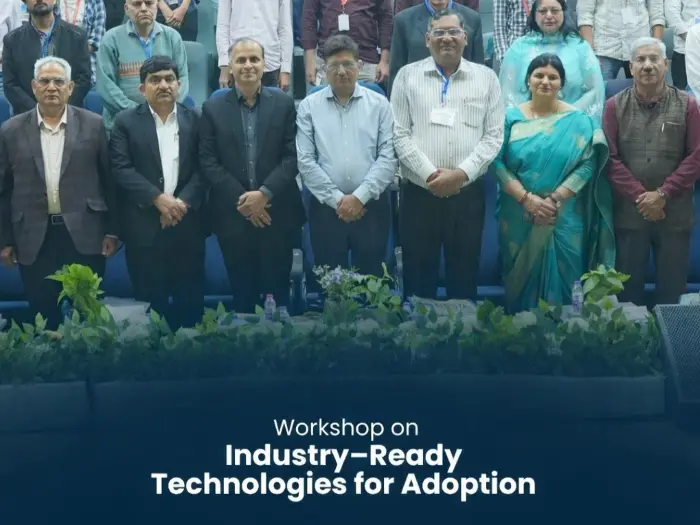
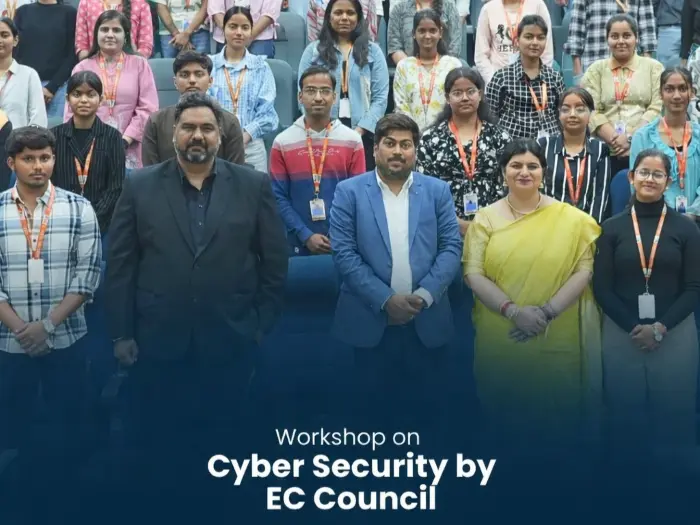
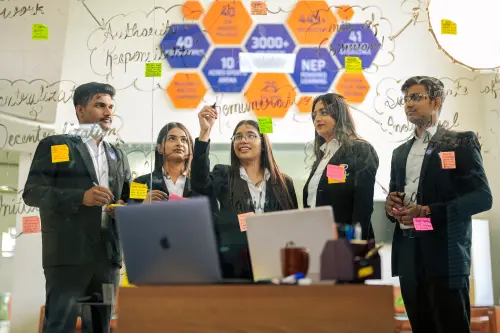
Students work on real-world industry problems, gaining hands-on experience and developing practical skills that align with current market demands.

Regular internships and industry interactions ensure students gain practical exposure, build professional networks, and stay aligned with evolving industry trends.
Interactive simulations and role-playing activities help students understand real-life scenarios, improve decision-making, and build confidence in professional environments.

Exposure to globally recognized case studies enables students to analyze complex business situations, think critically, and apply theoretical concepts effectively.
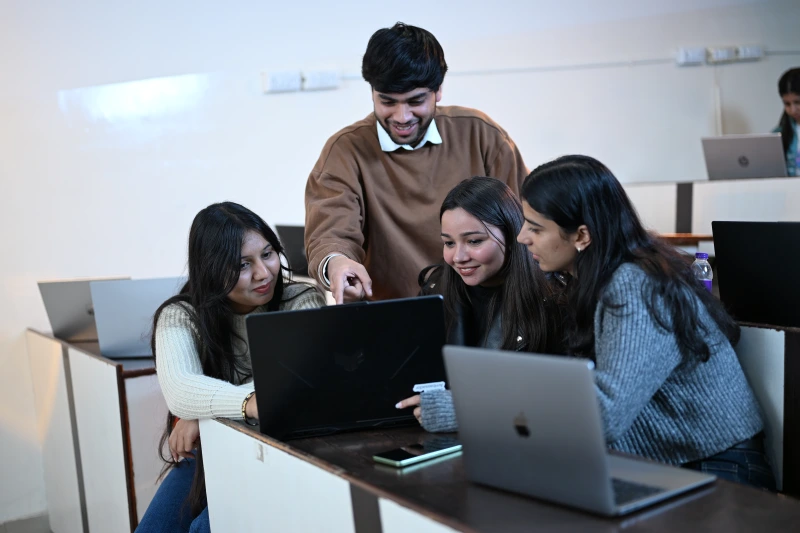









Individual Development Program (IDP) – Customized Career Plan


Manik Sharma, MBA
Canada Computers & Electronics (Package - INR 67.5 LPA)
Geeta University’s MBA program strengthened my leadership, decision-making, and problem solving skills through practical learning, helping me confidently tackle business challenges and grow professionally.

Rahul Mor, MBA
Blinkit (Package - INR 25 LPA)
Geeta University’s MBA program built my analytical, strategic, and operational skills through practical, case-based learning, preparing me to perform confidently in a competitive business environment.

Srishti Ahuja, MBA
Godrej Properties Ltd. (Package - INR 17 LPA)
My MBA at Geeta University strengthened my communication, client handling, and negotiation skills through practical, industry focused learning, preparing me to confidently manage real estate responsibilities from day one.

Arvind Kushwaha, MBA
Academor (Package - INR 8 LPA)
Geeta University’s MBA enhanced my business understanding, problem-solving, and adaptability through practical learning, preparing me to confidently begin my career with clarity and purpose.
Manik Sharma, MBA
Canada Computers & Electronics (Package - INR 67.5 LPA)
Geeta University’s MBA program strengthened my leadership, decision-making, and problem solving skills through practical learning, helping me confidently tackle business challenges and grow professionally.
Rahul Mor, MBA
Blinkit (Package - INR 25 LPA)
Geeta University’s MBA program built my analytical, strategic, and operational skills through practical, case-based learning, preparing me to perform confidently in a competitive business environment.
Srishti Ahuja, MBA
Godrej Properties Ltd. (Package - INR 17 LPA)
My MBA at Geeta University strengthened my communication, client handling, and negotiation skills through practical, industry focused learning, preparing me to confidently manage real estate responsibilities from day one.
Arvind Kushwaha, MBA
Academor (Package - INR 8 LPA)
Geeta University’s MBA enhanced my business understanding, problem-solving, and adaptability through practical learning, preparing me to confidently begin my career with clarity and purpose.
Find answers to common questions about eligibility, courses, placements, and campus facilities.
The SPBSB offers MBA with specializations in AI for Business, Digital Marketing, Finance, Marketing, Human Resource Management, Supply Chain Management, and Entrepreneurship & Family Business, along with a Ph.D. programme.
Applicants must have completed a bachelor's degree of at least three years' duration with a minimum of 50% marks.
The candidate with a bachelor's degree in any background and the required marks can apply.
A master's degree in a relevant field with a minimum of 55% marks.
No. Fresh graduates can consider the programme, subject to the current admission rules.
No. There is no such entrance exam for admission to the MBA. However, for availing scholarships, certain exams like CUET PG, GUTS etcetera can be opted by students.
Yes. A student can choose his or her preferable specialization from multiple specializations offered, allowing students to align their MBA with areas such as AI, marketing, finance, HR, supply chain, digital marketing or entrepreneurship.
MBA at SPBSB emphasizes AI-enabled learning, frequent curriculum updates, live industry projects, simulations, case-based learning, industry trainers, certifications and continuous industry engagement rather than relying only on classroom theory.
There are 7 specializations offered: AI for Business, Digital Marketing, Finance, Marketing, Human Resource Management, Supply Chain Management, and Entrepreneurship & Family Business.
It focuses on applying artificial intelligence to managerial decision-making and enterprise functions, including AI-enabled analytics, business applications, AI governance and digital innovation.
MBA Digital Marketing specialization includes SEO and SEM, social media analytics, email and mobile marketing, influencer and affiliate marketing, data-driven campaigns, UI/UX, AI and quick commerce.
The MBA Finance curriculum highlights behavioral finance, investment banking essentials, risk management and derivatives, corporate valuation, sustainable finance and financial modelling with AI.
This specialization covers talent analytics and AI recruitment, diversity and inclusion, employee experience, HR technology, people analytics, performance management and leadership development.
It includes consumer behaviour, brand strategy and equity, international marketing, quick-commerce marketing, marketing automation, sales promotion and advertising.
The specialization covers supply-chain analytics, sustainable logistics, global trade compliance, warehouse automation, e-SCM and last-mile delivery.
It includes startup funding, family-business governance, venture scaling, innovation and pivot management, succession planning and social entrepreneurship.
Yes. The AI for Business proposition is designed around applying AI to managerial and enterprise functions, making the focus business-oriented rather than limited to software development.
Project-based learning, live industry projects, simulations, role-plays, case-based learning and regular interaction with industry trainers and experts are an essential part of teaching at SPBSB.
Students work on real-world business problems, allowing them to apply concepts, analyse situations, develop solutions and build practical decision-making skills.
The students receive case-based learning using Harvard, IIM and global case repositories, giving them exposure to recognised business cases and complex decision-making situations.
Yes. Simulations and role-plays are highlighted as part of experiential learning to help students understand real-life business scenarios and improve decision-making and professional confidence.
Industry trainers simulate real-world problems in classes and repeatedly engage students in problem solving, helping develop critical, creative, lateral and analytical thinking.
Curriculum is revised semiannually with stakeholder inputs to keep theories, skills and learning aligned with changing industry requirements.
Yes. The MBA ecosystem spans finance, marketing, HR, operations and supply chain, entrepreneurship and AI-enabled business functions, allowing students to understand how business functions connect.
MBA Students can pursue global and industry certifications associated with organisations such as EC-Council, EY, Deloitte, Paytm, AWS, Cisco and IRM.
Management students can develop skills such as hands-on exposure to AI, machine learning, analytics and cybersecurity-related labs, alongside business applications of technology.
The School entails hands-on labs and an AI-enabled management ecosystem that includes AI, ML and analytics. The depth and modules depend on the student's selected programme or specialisation.
MBA students can learn cybersecurity supported through hands-on lab ecosystem and industry certifications.
AI is a broader part of the SPBSB learning environment, while the AI for Business specialisation goes deeper into AI-enabled analytics, enterprise applications, governance and strategy.
SPBSB highlights global certifications as a value addition to its MBA. The exact inclusion, certification body, assessment and any additional requirements should be confirmed for the applicable academic session.
Yes. Internships are an important element of MBA at SPBSB.
Internships allow students to test classroom concepts in real organisational settings, develop professional behaviour, understand business functions and build industry networks.
Yes. There is continuous industry engagement, industry trainers, expert interaction and corporate connect activities.
Yes. Live industry projects, simulations, case studies and internship-driven learning are specifically designed to expose students to practical business problems before they graduate.
Yes. The School also provides a ten-day learning experience in Dubai, Malaysia or Europe through its global-certification/immersion proposition, subject to the applicable programme and offering.
The School highlights a seven-day residential business experience at IIM Kozhikode involving faculty and industry experts. Availability and participation conditions should be confirmed for the relevant batch.
Yes. Continuous industry engagement, internships, corporate connect activities, expert interactions and live projects provide opportunities to build professional relationships.
The Leadership Odyssey Program (LOP) is presented as a structured career-development framework combining profiling, personalised skill blueprints, SWOT-based career planning and role-specific placement preparation.
The profiling phase includes aptitude and reasoning tests, psychometric and personality assessment, ATS-optimised resume auditing, interest mapping and SWOT analysis.
The LOP includes customised skill modules, quarterly progress tracking, skill-gap bootcamps and market-trend opportunity mapping.
Yes. The School describes an Individual Development Program with a customised career plan and role-specific preparation.
The career-acceleration phase includes role-specific preparation, company-culture and performance analysis and final placement-readiness mapping.
Yes. Profiling, SWOT analysis, interest mapping and strength-to-role alignment are specifically included in the Leadership Odyssey Program.
The LOP explicitly includes an ATS-optimised resume audit.
Graduates can explore litigation, judicial services, corporate legal roles, law-firm associateships, legal advisory positions, legal officer roles in PSUs or government, academia, arbitration and mediation, or entrepreneurship.
Potential roles include AI-enabled business analysis, digital transformation, analytics, product and strategy functions and technology-driven management roles, depending on the student's skills and employer requirements.
Career paths can include digital marketing, SEO/SEM, social media, performance marketing, marketing analytics, growth marketing, content and campaign management, influencer marketing and e-commerce roles.
Potential pathways include financial analysis, investment and corporate finance, valuation, risk management, banking, financial planning and finance roles using financial modelling and analytics.
Potential roles include HR business partnering, talent acquisition, people analytics, learning and development, employee experience, performance management and HR technology-related roles.
Potential roles include supply-chain analyst, logistics and operations management, procurement, warehouse and inventory management, trade compliance and last-mile or e-commerce supply-chain functions.
Graduates can pursue startup ventures, family-business management, business development, innovation, venture scaling and social entrepreneurship, as well as conventional management roles.
Yes. An MBA can lead to roles across multinational and domestic organisations, depending on the student's skills, specialisation, recruitment opportunities and employer requirements.
SPBSB provides career-readiness and placement support, while the final outcome depends on student performance, eligibility, skills and recruiter requirements.
The current page showcases individual alumni outcomes including packages of ₹67.5 LPA, ₹25 LPA, ₹17 LPA and ₹8 LPA. These are individual examples and should not be interpreted as a guaranteed or average salary for every MBA student.
Specialisation, technical and analytical skills, communication, internships, certifications, academic performance, interview readiness, prior experience and the roles available in a particular recruitment cycle can all influence outcomes.
Yes. Entrepreneurship and Family Business is one of the MBA specialisations, and the School highlights startup funding, venture scaling, innovation, pivot management and social entrepreneurship.
Yes. The Entrepreneurship & Family Business specialisation addresses family-business governance, succession planning, venture scaling and innovation, which can be particularly relevant to next-generation family-business leaders.
Yes. Startup funding strategies are specifically taught within the Entrepreneurship & Family Business specialisation.
Yes. Succession planning is explicitly included in the Family Business specialisation.
Yes. Venture scaling techniques, family-business governance, innovation and pivot management are part of the stated curriculum.
SPBSB describes experienced faculty and industry experts combining academic guidance with industry exposure and professional expertise.
Through industry trainers, live projects, internships, corporate connect, case studies, simulations, expert interactions, certifications and immersion experiences.
Yes. The MBA eligibility does not require prior work experience, making the programme accessible to eligible graduates at the start of their careers.
Its stated differentiators include AI-enabled management education, semiannual curriculum updates, live industry problem solving, global certifications, technology labs, case-based learning, internships, Leadership Odyssey and international/industry immersion opportunities.
The choice should follow the career direction you want to build: AI and digital transformation for AI for Business; customer acquisition and online growth for Digital Marketing; financial decision-making for Finance; brand and sales roles for Marketing; people and talent for HR; operations and logistics for Supply Chain; or venture/family-business leadership for Entrepreneurship & Family Business.
Yes. MBA eligibility accepts a bachelor's degree in any background of at least three years with minimum 50% marks rather than limiting admission to commerce or management graduates.
Yes. The School's AI, analytics, machine-learning, cybersecurity and digital-business focus can be relevant to management roles in technology-driven organisations.
The School's emphasis on case-based learning, structured problem solving, analytics, business strategy and real-world projects can help develop skills relevant to consulting, although individual recruitment outcomes depend on the student's profile and opportunities.
Yes. AI-enabled analytics and decision-making, applied AI tools, enterprise applications and data-driven approaches are centered on business knowledge.
Students should consider the type of work they want to do, their strengths, preferred business function, appetite for quantitative or technology-heavy work, long-term career goals and the skills they are willing to build alongside the MBA.
Founded in 1985, the Geeta Group of Institutions has emerged as a major educational hub with institutions spanning school education to doctoral programs. SPBSB benefits from the integrated ecosystem of:
AI-enabled multidisciplinary campus
Communication & Corporate Readiness
Advanced Technology, Certifications, and Industry Skills